REVIEW · ATHENS
Athens: Roman Agora & Ancient Agora E-ticket & 2 Audio Tours
Book on GetYourGuide →Operated by Clio Muse Tours · Bookable on GetYourGuide
Athens can feel like a maze—this plan keeps you on track. I like that you get time-slotted e-tickets to both the Roman Agora and Ancient Agora, so you’re not hunting for the right counter while the sun is climbing. I also like the built-in offline audio tours, so you can keep moving at your own pace and replay the stories after you’ve finished walking. One possible drawback: this is self-guided, so if you need a human to fix confusion, adjust for site changes, or explain details on the spot, you’ll be on your own.
The Roman Agora and Ancient Agora are linked by theme—Greek public life turning into Roman civic space—so the pair works well as a two-part day. You’ll see standout structures like the Gate of Athena Archegetis and the Tower of the Winds, then shift to the Ancient Agora’s museum exhibits and the Stoa of Attalos. The main consideration is technical: you’ll need a compatible smartphone, enough storage, and ideally headphones.
In This Review
- Key things to know before you go
- Roman Agora and Ancient Agora: two eras, one phone-guided day
- Price and value: what $51 gets you (and what it doesn’t)
- How the timed e-tickets work (and why you should pick the right slot)
- Roman Agora entrance day: Athena’s gate, Tower of the Winds, and easy orientation
- Getting there without stress
- What you’ll actually see (and why it helps)
- Where the Roman Agora tour ends
- Ancient Agora day: construction changes, the museum angle, and the Stoa of Attalos
- The key logistics twist: the entrance is different
- Your route ends at a major stopping point
- What to focus on once you’re inside
- Smartphone audio tours: offline maps, real pacing needs, and headphone advice
- Compatibility and storage you must plan for
- Headphones: bring them
- The tone of the audio (and a real risk)
- Replay benefit
- Practical walking flow: connecting Monastiraki to Roman Agora, then onward to Thissio
- What you’ll love most: the specific site pair and the photo opportunities
- Who this is best for (and who should rethink it)
- Should you book this Roman Agora & Ancient Agora audio e-ticket combo?
- FAQ
- Do I need to meet anyone at a specific location?
- Where does the Roman Agora audio tour start and end?
- Where do I enter the Ancient Agora if the main entrance is closed?
- What languages are included for the audio tours?
- What do I need on my phone and can I use offline content?
- Are discounted or free admission tickets handled as skip-the-line entry?
Key things to know before you go
- Two time windows, one flow: choose a start time for the Roman Agora, then a later slot for the Ancient Agora.
- No meeting point: you start at the Roman Agora entrance and end inside the sites (details below).
- Offline audio + maps: the tour content is downloaded ahead of time to help with roaming costs.
- Works around the Ancient Agora entrance: the main entrance is temporarily closed due to construction.
- Headphones are not included: plan to bring your own for comfortable listening.
- Replay it later: the audio can be used before or after your walk, right from your phone.
Roman Agora and Ancient Agora: two eras, one phone-guided day
This experience is built for people who want a straightforward Athens day without booking separate tours, arguing with ticket booths, or wasting time figuring out what to see first. You’re essentially buying a simple framework: two e-tickets with set time slots, plus two self-guided audio tours that run on your phone.
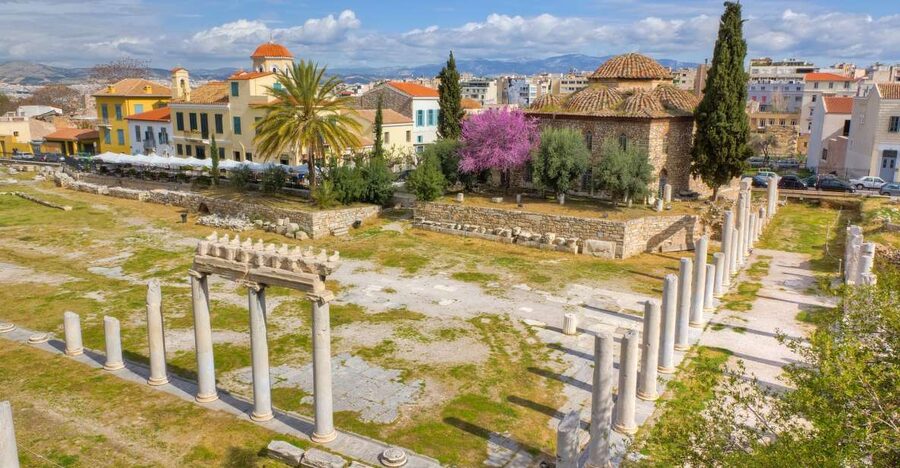
The Roman Agora and Ancient Agora are close enough to combine well, but they feel very different. The Roman Agora is smaller and easier to read quickly—great if you’re arriving in Athens with limited energy. Then the Ancient Agora opens up more of the political and daily-life story of classical Athens, plus museum stops that help you make sense of ruins that might otherwise look like scattered stone.
If you like to walk independently but still want your eyes guided, the audio approach fits well. If you prefer a live guide to answer questions or tailor the pace, you might feel the lack of a human voice.
You can also read our reviews of more tours and experiences in Athens.



Price and value: what $51 gets you (and what it doesn’t)
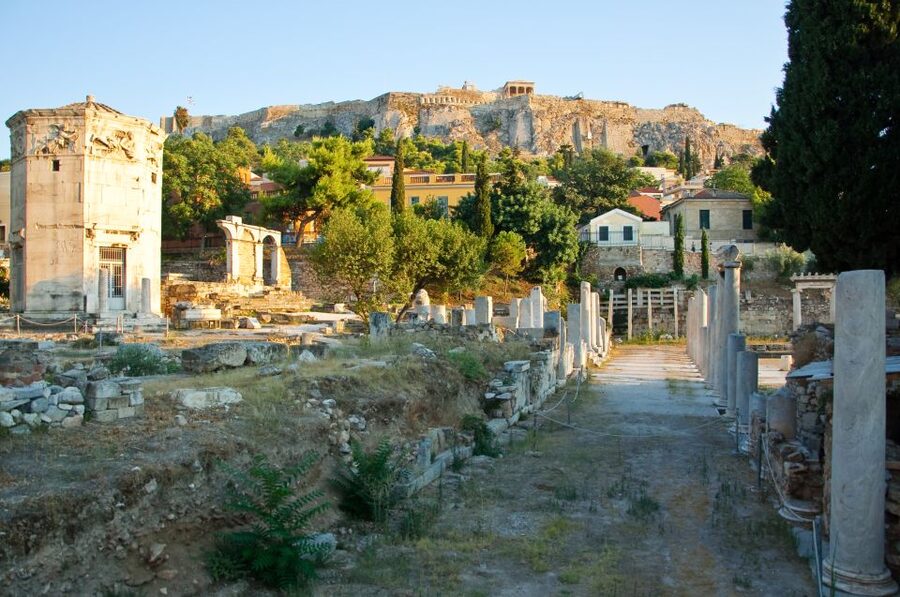
At about $51 per person, you’re paying for four things: two timed entry tickets (Roman Agora and Ancient Agora), two self-guided smartphone audio tours, and downloadable offline content that includes narration and maps. That’s a lot of planning value bundled into one order.
What you’re not getting is a guide walking with you, transportation, or a provided phone/headset. So the value is strongest if you:
- already plan to do a walking day in central Athens,
- are comfortable using your phone offline,
- and want structure without paying for a guided group tour.
If you’re expecting a guaranteed “tour-level” narration experience, keep expectations realistic. The format is a phone script, not a conversation. Audio quality and pacing can be hit or miss depending on your device and your listening setup—so bring headphones you trust and keep the phone charged.
How the timed e-tickets work (and why you should pick the right slot)
This is not one ticket with free wandering all day. You choose a schedule that’s split into two parts: one time slot for the Roman Agora, then a later time slot for the Ancient Agora.
You can choose among these pairs:
- 08:00 AM Roman Agora, then 10:00 AM Ancient Agora
- 10:00 AM Roman Agora, then 12:00 PM Ancient Agora
- 01:00 PM Roman Agora, then 03:00 PM Ancient Agora
- 02:00 PM Roman Agora, then 04:00 PM Ancient Agora
Why does that matter? Because Athens heat and museum crowds both move fast. If you pick a late slot, you’ll likely enjoy fewer mid-day crowds, but you’ll also spend more time dealing with the “tired legs” factor. If you pick the early slot, you’ll get better light for photos and cooler walking conditions, but you’ll start your day earlier.
Also, there’s no meeting point. You’re expected to follow the tour path that matches your time slot choices, starting at the Roman Agora entrance and finishing within the archaeological areas.
Roman Agora entrance day: Athena’s gate, Tower of the Winds, and easy orientation
Your Roman Agora audio tour is designed to start at the entrance at Epaminonda 6-22, Athina 105 55. When you arrive, you’ll be walking into a site that’s compact enough to feel manageable even if you only have a short attention span (or a busy travel day).
Getting there without stress
The easiest approach described here is:
- reach Monastiraki metro station (lines 1 and 3),
- then walk along Areos for about 230 meters toward the Roman Agora.
This matters because it keeps you from adding extra transit complexity. In Athens, that’s often the difference between a calm start and a rushed one.





What you’ll actually see (and why it helps)
As you follow the audio, you’ll be guided past major features, including:
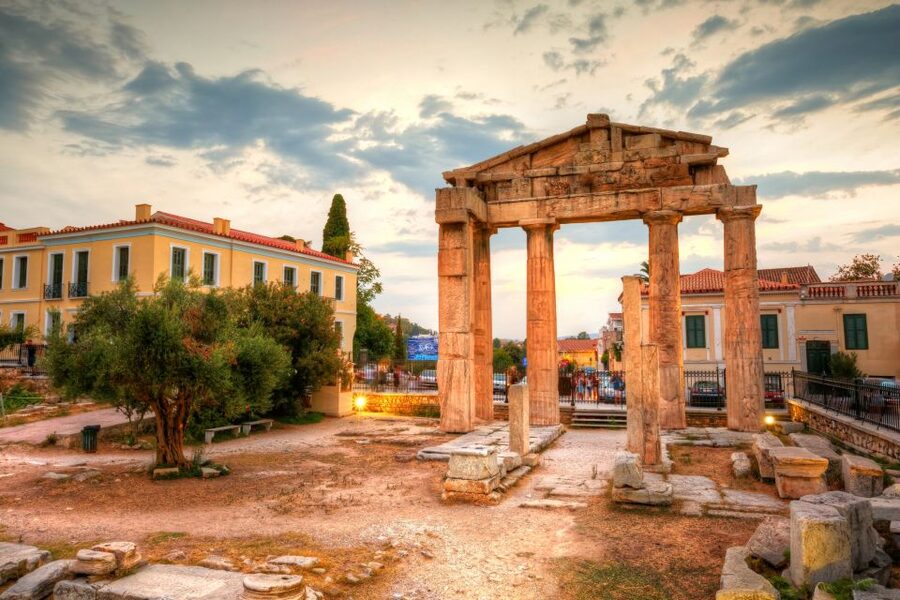
- the Gate of Athena Archegetis
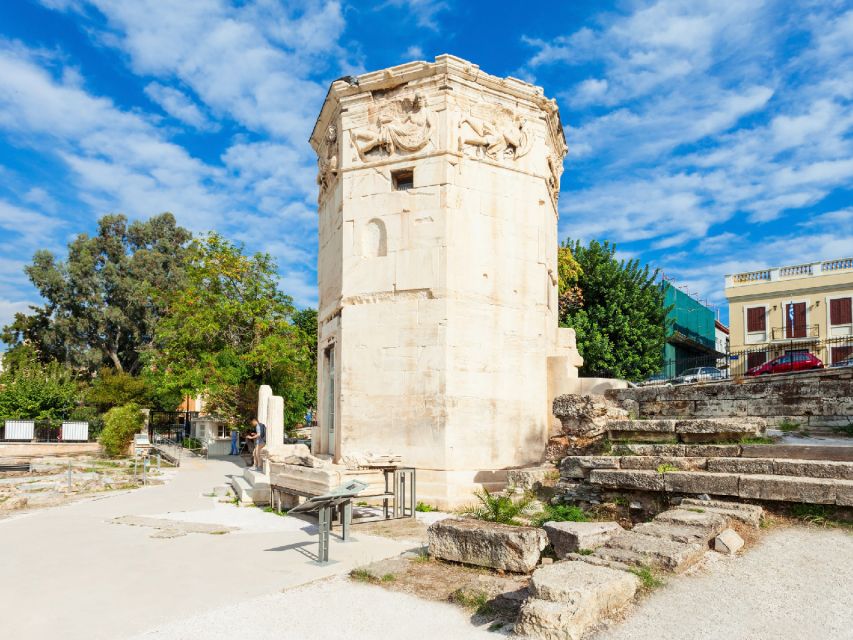
- the Tower of the Winds
These are the kinds of places that can be under-appreciated if you only see them from the outside. With narration guiding you, the structures become more than “another ancient building.” You learn what to look for and what role these spaces played in the civic rhythm of the city.
Even though this is the “Roman” Agora, it doesn’t replace the Greek story—it shows how older Athens was reshaped into Roman-era public life. That contrast sets you up well for the next site.
Where the Roman Agora tour ends
The audio tour ends within the archaeological site, near the Mosque of the Conqueror. That end point is useful because it prevents that awkward “where do I go now?” feeling. Instead of wandering back out, you can keep moving toward your next plan.
Ancient Agora day: construction changes, the museum angle, and the Stoa of Attalos
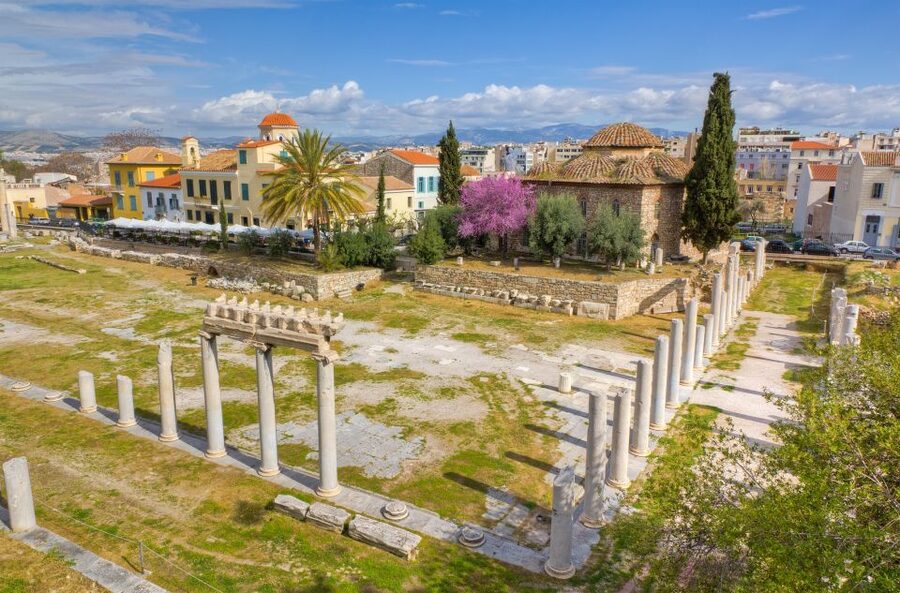
The Ancient Agora portion is where many people slow down, because it feels like the center of gravity for classical Athens. You’re not just looking at ruins—you’re also dealing with exhibits housed in the site’s museum spaces.
The key logistics twist: the entrance is different
There’s an important heads-up: the main entrance of the Ancient Agora is temporarily closed due to ongoing construction. You must use the temporary entrance on Apostolou Pavlou Street, at the level of Akamantos Street.
And there’s another practical note: the only way to get to the Ancient Agora is on foot from Thissio station. So if your plan involves multiple stops around Thissio, you’ll be at an advantage.
Your route ends at a major stopping point
The Ancient Agora tour ends at the Stoa of Attalos, inside the archaeological site and not far from the entrance. That’s a good way to finish because the Stoa is a “landmark you can remember.” It’s easier to orient yourself after your audio tour when you end at a structure that feels central.
What to focus on once you’re inside
This part of the experience leans on storytelling and exhibit context. If the audio does its job well, you’ll find yourself looking at the site with questions like:
- What did people do here day to day?
- How did the city organize public life?
- What changed when later cultures came in?
A key benefit here is that the audio can help translate why certain remnants matter—especially when you’re staring at stone that doesn’t come with a simple label.
Smartphone audio tours: offline maps, real pacing needs, and headphone advice
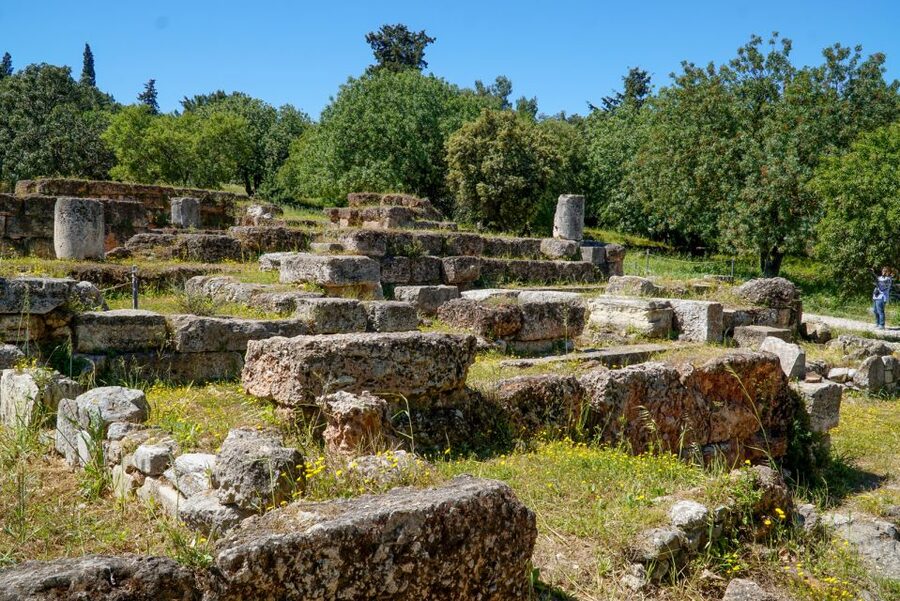
You download the app and the two audio tours after you receive your ticket by email. The included content is offline, including text, audio narration, and maps—useful for avoiding roaming charges.
Compatibility and storage you must plan for
Your phone needs to meet these requirements:
- Android version 5.0 and later, or iOS
- not compatible with Windows Phones and some older iOS/iPad models (and iPhone 5/5C, iPod Touch 5th gen, iPad 4th gen, iPad Mini 1st gen or older)
You also need storage space. Plan on 200–300MB for the tour download.
If your phone battery is weak or your storage is tight, your “self-guided” day becomes a frustrating one. This is the part you should prep the night before.
Headphones: bring them
Headphones are not included. If you want the narration to feel clear rather than muffled, bring your own. Even basic earbuds help, and they also keep your listening from bothering other people.
The tone of the audio (and a real risk)
One review issue flagged that some commentary felt like it might be machine-like, with pronunciation problems and pacing that didn’t give listeners much time to move. That doesn’t mean your experience will be bad—but it’s a reason to stay alert to how the narration aligns with your walking speed.
In practical terms:
- Don’t walk too fast to “beat” the audio.
- If you miss a section, just pause, back up the timeline, and continue at your own pace.
- If your audio sounds unclear, try a different output (or keep volume consistent and use headphones).
Replay benefit
Because the tours are available before and after your visit, you can use them again when the site imagery sticks in your head. That replay time can turn random ruins into an actual story you remember.
Practical walking flow: connecting Monastiraki to Roman Agora, then onward to Thissio
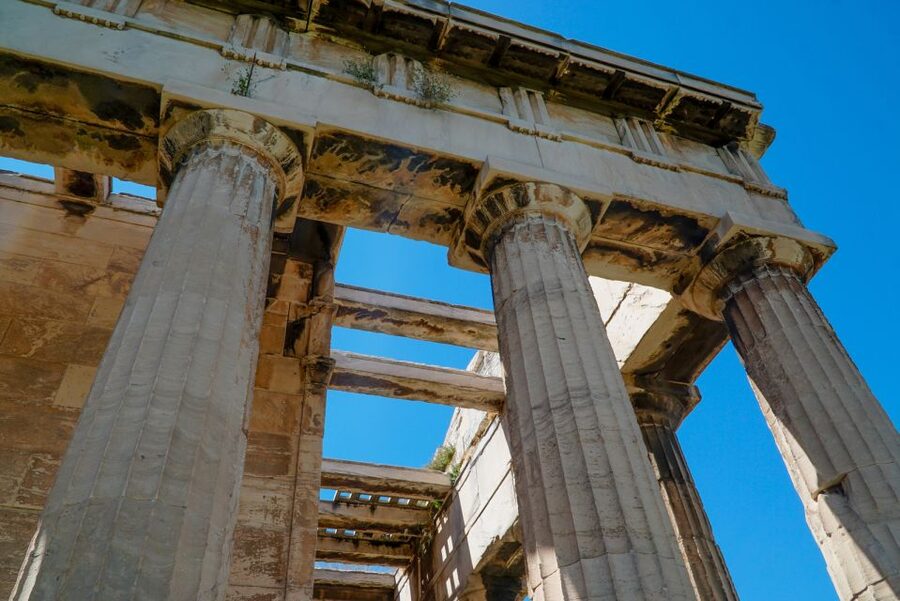
This plan is designed for walking, not hopping around by taxi. That’s often the best way to do Athens, because central streets reward slow movement and photo stops.
Here’s the “shape” of the day:
- Start at Roman Agora entrance near Monastiraki.
- Finish inside that site area.
- Later, go to Thissio station and approach the Ancient Agora via the temporary entrance.
Since transportation isn’t included, you’ll be responsible for moving between those neighborhoods. That means the schedule you pick matters. If you choose a very tight gap between the two time slots, you might end up stressing about transit timing instead of enjoying the walk.
What you’ll love most: the specific site pair and the photo opportunities
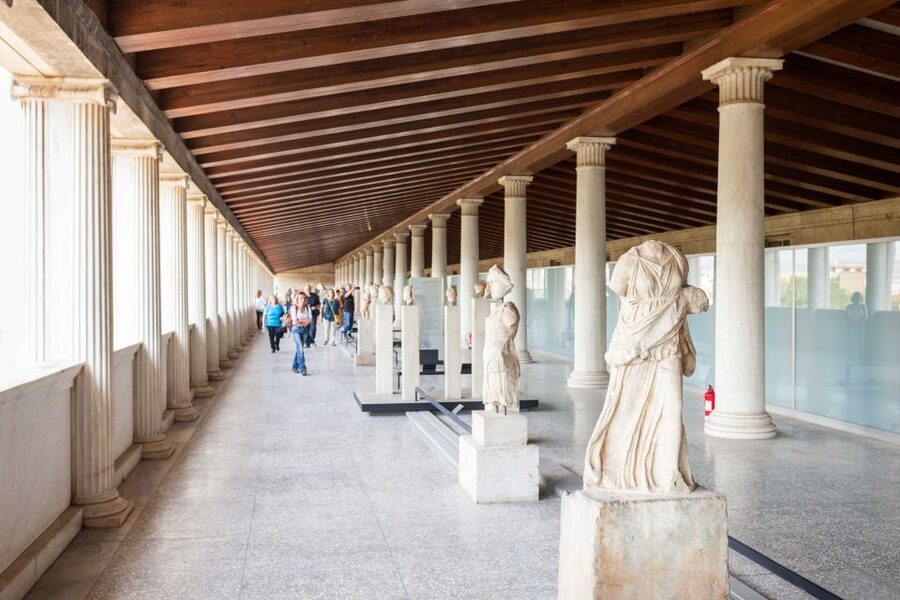
Two parts of this experience tend to score high: the structure of the combo and the fact that it points you to visible “wow” elements.
You’ll see named features like the Gate of Athena Archegetis and the Tower of the Winds, and you’ll get prompt direction on where to look and what to notice. That kind of cueing is especially valuable at archaeological sites, where it’s easy to feel lost even when you’re standing in front of something famous.
You’ll also have natural photo chances. The audio tour approach doesn’t lock you into a group line, so you can stop for city views when you find a viewpoint that works for you.
And because you can revisit the audio later, you can turn your best photos into a memory that has context—not just an image.
Who this is best for (and who should rethink it)
This tour bundle is a strong fit if you:
- want self-guided freedom with built-in structure,
- are comfortable using your smartphone as your guide,
- want to handle entry tickets without dealing with ticket lines on the day,
- and like history when it’s explained in plain, walking-friendly language.
It might be less ideal if you:
- need a live guide to manage questions,
- struggle with phone downloads, offline storage, or headphone use,
- or expect the narration to adjust to your pace in real time.
If you’re traveling with limited time and want a clean plan for two major sites, this works well. If you want a conversation, you’ll need a different format.
Should you book this Roman Agora & Ancient Agora audio e-ticket combo?
Book it if you want a straightforward Athens day with timed entry and two offline audio tours that help you understand what you’re seeing without joining a group. The value is strongest when you prepare your phone in advance, pick a sensible time slot, and enjoy walking at your own tempo.
Skip it or consider another option if you know you hate phone-based navigation, you don’t plan to bring headphones, or you’re the type who prefers a human guide to handle site changes and questions. In Athens, those site logistics can matter—and with this being self-guided, your preparation is what protects your day.
If you do book, do one thing before you go: download everything and make sure your phone has the storage and battery to run the tours smoothly. That’s the difference between a calm ancient-city walk and a stressful one.
FAQ
Do I need to meet anyone at a specific location?
No. There is no meeting point. The Roman Agora audio tour is designed to start at the entrance of the Roman Agora.
Where does the Roman Agora audio tour start and end?
It starts at the entrance at Epaminonda 6-22, Athina 105 55, and it ends within the archaeological site near the Mosque of the Conqueror.
Where do I enter the Ancient Agora if the main entrance is closed?
Use the temporary entrance on Apostolou Pavlou Street at the level of Akamantos Street, since the main entrance is temporarily closed. You must reach it on foot from Thissio station.
What languages are included for the audio tours?
The audio tours are available in English, Spanish, German, French, and Italian.
What do I need on my phone and can I use offline content?
You need a compatible Android or iOS smartphone and enough storage space (200–300MB). The content includes offline text, audio narration, and maps.
Are discounted or free admission tickets handled as skip-the-line entry?
No. Free or reduced admission tickets do not include skip-the-line privileges and can only be acquired at the ticket booth onsite.