REVIEW · MUMBAI
Victorian Gothic Heritage Quarter and Art Deco Walking Tour
Book on Viator →Operated by Cityscape Mumbai Tours · Bookable on Viator
Mumbai’s colonial grammar is written in stone. This Victorian Gothic Heritage Quarter and Art Deco walk strings together major landmarks in a short 2-hour loop, and I like that you get multiple free admission stops plus bottled water. I also like the tight, guided rhythm: you stand at big façades like the Mumbai GPO and Rajabai Clock Tower, then you move on before the crowd and heat get the better of your photos. One consideration: the schedule is packed, so it’s best if you’re happy with quick stops rather than long, slow museum time.
A key reason this tour works is the route itself. You start in Colaba, sweep through landmark public buildings, cross into cultural areas like Kala Ghoda, and end near Churchgate Station. It’s also a small group, max 15, and multiple guides (Abhi/Abhishek, Ravi, Yash) are praised for clear English and friendly pacing.
In This Review
- Key things that make this walk worth your time
- Entering Mumbai’s Gothic and Art Deco “walkable map”
- From Regal Cinema to the Mumbai General Post Office (GPO): a grand welcome
- Town Hall and the Asiatic Society Library: neoclassical calm and old texts
- Horniman Circle Garden: a park pause in a colonial frame
- St. Thomas Cathedral: Mumbai’s oldest Anglican anchor
- Bombay High Court and Rajabai Clock Tower: Gothic Revival power lines
- Oval Maidan: Victorian Gothic meets Art Deco street scale
- Kala Ghoda and the Black Horse statue: culture between the buildings
- Gateway of India and the Taj Mahal Palace: the finish with big symbolism
- Time, pace, and how long you should plan for
- Price value: what $18.88 buys you in Mumbai
- Who this walking tour suits best
- Should you book the Victorian Gothic Heritage Quarter and Art Deco Walking Tour?
- FAQ
- How long is the Victorian Gothic Heritage Quarter and Art Deco walking tour?
- How many people are in the group?
- Where does the tour start and end?
- What’s included in the price?
- Do the stops require paid admission?
- Is private transportation included?
- Is it easy to reach using public transportation?
- When do I get confirmation after booking?
- Can I cancel for a refund?
Key things that make this walk worth your time
- Free-entry lineup across the route: every listed stop is marked admission ticket free, so you spend money on nothing but yourself.
- A real mix of styles in a small radius: Indo-Saracenic grandeur, Gothic Revival courts and towers, plus Art Deco details around Oval Maidan.
- Architecture storytelling at street level: you don’t just see buildings, you learn what they were for and who designed them.
- Local-life bonus on weekends: on Sundays, parks along the route can have active cricket energy.
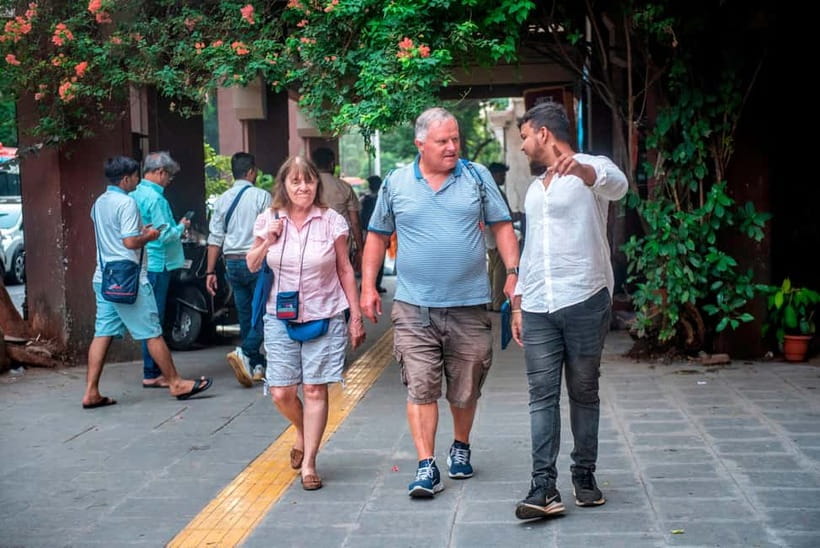
- Small group, guided attention: max 15 travelers helps questions and photo stops stay orderly.
- Guides get called out by name: Abhi/Abhishek, Ravi, and Yash show up repeatedly in feedback for good explanations.
Entering Mumbai’s Gothic and Art Deco “walkable map”
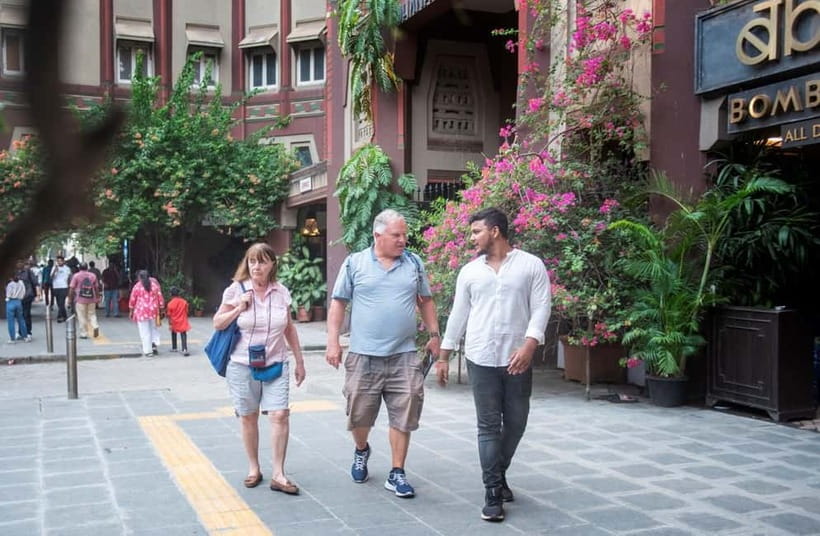
This is the kind of tour that helps you read Mumbai quickly. In two hours, you’ll get a guided tour of how British-era civic power and private wealth shaped the city’s skyline—then you’ll notice the Art Deco accents that came later.
The meeting point is Regal Cinema, Apollo Bandar, Colaba, and the walk ends at Churchgate Station. That’s practical: you start near Colaba’s main visitor orbit and finish near one of Mumbai’s most convenient transit hubs. It makes it easier to pair this with your other plans without feeling like you’ll be stuck on the wrong side of town.
Price is $18.88 per person, which matters here because the tour is mostly exterior viewing plus guided context. There’s no private transport cost added, and the listed stops don’t require paid entry. You’re basically paying for interpretation—what to look for, what to ignore, and why these buildings mattered.
You can also read our reviews of more tours and experiences in Mumbai.


From Regal Cinema to the Mumbai General Post Office (GPO): a grand welcome
Your first stop is the General Post Office Mumbai, built in 1913 and known for its Indo-Saracenic grandeur. The tour frames it as a practical landmark too, not just a pretty façade: it’s tied to the city’s mail and communication story, with the GPO positioned as a central piece of Mumbai’s infrastructure.
You’ll have about 15 minutes here, which is enough time to spot the architectural style and get oriented. The guide also brings in the design credit—John Begg—and that helps you start connecting buildings across the rest of the walk.
The value at this stop isn’t museum depth; it’s pattern recognition. Once you understand the GPO’s style language, the later Gothic Revival elements start to feel more intentional instead of random.
Town Hall and the Asiatic Society Library: neoclassical calm and old texts
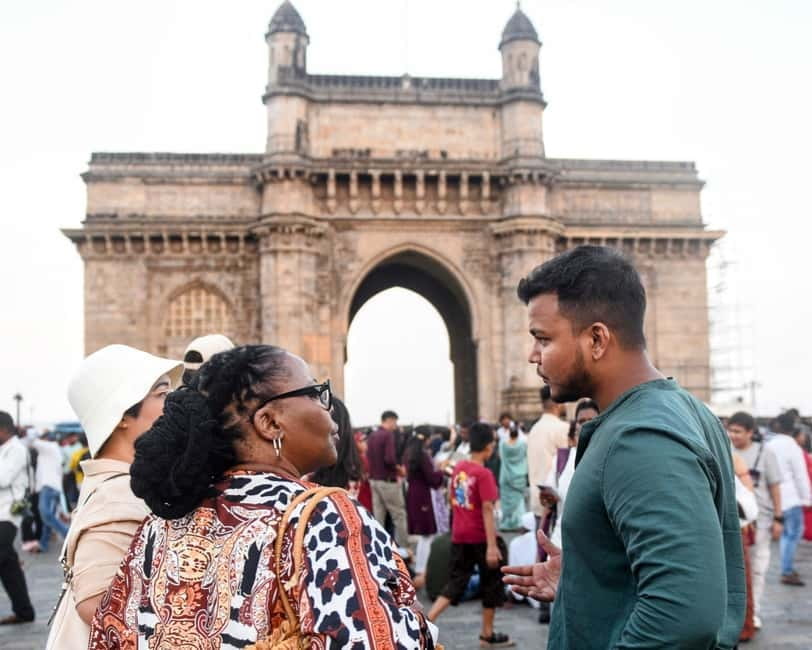
Next up is the Town Hall (Asiatic Society Library) area. The tour highlights the Asiatic Society Library as founded in 1804, and it leans into what makes it special: neoclassical architecture and a collection that includes rare manuscripts, ancient texts, and priceless artifacts.
Again, you’re looking at around 15 minutes. That’s short, but it’s the right length for a guided primer. You’re not trying to absorb every single artifact in one go; you’re learning why this library sits at the center of Mumbai’s British-era intellectual scene and how architectural style signaled status.
If you like places that feel quiet even when the city is loud, this is a great pivot point. It slows the pace after the first big civic façade and sets you up for the more dramatic vertical lines of the Gothic Revival stops later.
Horniman Circle Garden: a park pause in a colonial frame

Then comes Horniman Circle Garden, built in 1860 and surrounded by grand colonial buildings. The tour names it as a serene oasis in the middle of the city, and it explains the naming—British editor Benjamin Horniman.
You’ll get about 15 minutes here, which is perfect for a breather. Parks in walking tours can be hit-or-miss, but this one is useful because it helps you reset your eyes. After focusing on stonework and façades, you can look at the street grid and building relationships with fresh attention.
Practical tip for this stop: use it for photos and positioning. If your next stops feel like they require more concentration, a short, calm park break is honestly a smart move, not just a pleasant one.
St. Thomas Cathedral: Mumbai’s oldest Anglican anchor
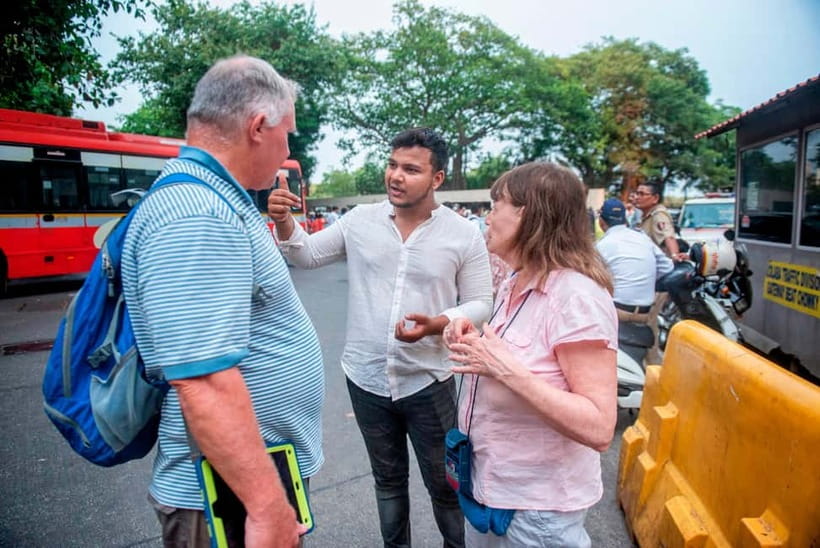
After the garden, you’ll visit St. Thomas Cathedral Mumbai, described as the city’s oldest Anglican church, consecrated in 1718. The emphasis here is British colonial architecture and the role it played in the city’s religious history.
This stop is also roughly 15 minutes, so expect a guided walk-and-look format. The goal is to see how this older church sits inside the later wave of British-era civic buildings you’ll see around it. That layering is one of the quiet thrills of Mumbai: time periods don’t stay neatly separated.
If you’re the type who likes to compare how different eras used different forms—arched windows, tower shapes, façade rhythm—St. Thomas Cathedral gives you a useful contrast before you jump into the courts and clock tower.




Bombay High Court and Rajabai Clock Tower: Gothic Revival power lines

Two of the most visually satisfying stops are HIGH COURT OF BOMBAY and Rajabai Clock Tower.
At the High Court, the tour points to its Gothic Revival style and notes it was inaugurated in 1879. It’s framed as a cornerstone of Mumbai’s judicial system, and the guide’s job is to translate those dates and facts into what you’re seeing: intricate architectural detail and the sense of authority that comes with Gothic shapes.
Then you shift to the Rajabai Clock Tower, completed in 1878 at the University of Mumbai. The tour mentions that it was designed by Sir George Gilbert Scott and funded by Premchand Roych… (the name is truncated in the provided details, but the point stands: patronage and design are part of the story). This is where the Gothic story becomes a landmark silhouette.
Why these two stops together work: you go from law to education, both delivered in the same high-drama architectural language. You start to notice that Gothic Revival wasn’t only for churches. It was used to communicate institutional weight.
Oval Maidan: Victorian Gothic meets Art Deco street scale

From there you’ll head to Oval Maidan, a historic recreational ground established in the 19th century. The tour calls out something useful for style watchers: Oval Maidan is flanked by buildings featuring Victorian Gothic elements and Art Deco architecture.
You’ll have around 10 minutes here, so think of it as a quick style scan of the area. This is also a stop where local-life can show up. One guide-led Sunday experience included a park stop where cricket matches were on, which is a very Mumbai way of life to see in the middle of a heritage walk. If you’re going on a weekend, keep an eye out for active cricket energy near the park spaces.
If you’re short on time in Mumbai and want a “before-and-after” comparison of older Gothic forms next to later Art Deco details, Oval Maidan is one of the best places to spot it.
Kala Ghoda and the Black Horse statue: culture between the buildings
Next is Kala Ghoda, named after a King Edward VII statue (the Black Horse). The tour frames Kala Ghoda as a cultural precinct known for art galleries, museums, and street art, and it notes it hosts the Kala Ghoda Arts Festival.
Your time here is short—about 5 minutes—but that’s not a problem because this stop functions like a directional marker. After the heavy architecture stops, Kala Ghoda gives you a sense of what the area is used for now, not only what it used to represent.
This is also where your guide can help you pick what to pursue next. Even without museum entry on this walk, you’ll leave knowing where to look if you want to add galleries later.
Gateway of India and the Taj Mahal Palace: the finish with big symbolism
To close, you’ll see two Mumbai icons in quick succession.
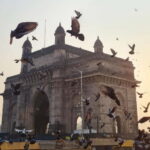
First is the Gateway of India, built in 1924 to commemorate the visit of King George V and Queen Mary to India. You’ll get about 10 minutes, which is enough for the classic viewpoint photos plus some guided interpretation of its meaning as a monument tied to the colonial era.
Then comes The Taj Mahal Palace, Mumbai, a historic luxury hotel built in 1903. The tour highlights its architectural beauty and heritage and notes it overlooks the Arabian Sea. You’ll have about 5 minutes there—again, quick exterior viewing, but it’s a strong end cap.
Why I like this ending: the walk moves from civic architecture to major monuments, so you finish with both context and spectacle. Ending near Churchgate Station also helps you keep momentum rather than turning the day into a transit puzzle.
Time, pace, and how long you should plan for
The tour is listed at about 2 hours, but you should plan for it to run a bit long if your guide adds extra stops or you spend more time taking photos. One experience described a longer version with unscheduled stops, and that’s the kind of variance worth being mentally ready for.
This is also a walking tour, so your biggest practical factor is comfort. Wear shoes you can stand in for long blocks, and expect several short segments rather than one long sit-down break. The stops are timed mostly around 5 to 15 minutes, so your pace is a key part of the experience.
Good news: bottled water is included, and the tour is described as near public transportation, so it’s easier to start and end cleanly.
Price value: what $18.88 buys you in Mumbai
At $18.88 per person, this walk can feel like a bargain—especially because the listed stops are admission ticket free. You’re not paying for entry fees that can balloon on architecture days.
Instead, you’re paying for:
- A route that hits the most noticeable Victorian Gothic and Art Deco clues in central Mumbai
- A guide who connects dates, designers, and purpose to the façade shapes you’ll see
- A small group size (max 15), which tends to make questions easier
That value equation changes if you want long museum-style time inside buildings. This tour is built for outside viewing plus quick context, not for deep archive study.
One more balancing note: the feedback is strongly positive overall (4.7 rating with a high recommendation rate), but there is at least one unhappy note about the guide’s knowledge and presentation. The way to protect yourself is simple: treat this as an architecture storytelling walk, not a guaranteed lecture at master-class depth.
Who this walking tour suits best
This tour fits you if you want:
- A fast introduction to Mumbai’s colonial-era architecture
- A guided way to understand how Gothic Revival shows up in civic buildings and how later Art Deco appears nearby
- A small-group format that doesn’t feel like you’re being herded
It also works well for first morning plans because it starts in Colaba and ends by Churchgate—you can keep exploring right after.
If you already know Mumbai architecture well and want lots of indoor time, you might find this a bit too “exterior and quick.” But if you’re building your bearings, it’s a solid use of limited time.
Should you book the Victorian Gothic Heritage Quarter and Art Deco Walking Tour?
I’d book it if you want a clear, walkable overview of how Mumbai’s British-era buildings and later styles shape the city you see today. The combination of free-entry stops, a small group up to 15, and named landmarks like the GPO, High Court, and Rajabai Clock Tower makes it good value at $18.88.
Hold off if your perfect tour is mostly inside museums or if you need a slow pace. And remember: walking tours depend on the guide’s communication style. The overall feedback highlights guides like Abhi/Abhishek, Ravi, and Yash as strong English presenters, but no tour is 100 percent guaranteed for every personality.
FAQ
How long is the Victorian Gothic Heritage Quarter and Art Deco walking tour?
It’s listed at approximately 2 hours.
How many people are in the group?
The tour has a maximum of 15 travelers.
Where does the tour start and end?
It starts at Regal Cinema, Apollo Bandar, Colaba, Mumbai, and ends at Churchgate Station.
What’s included in the price?
Bottled water is included.
Do the stops require paid admission?
All listed stops show admission ticket free.
Is private transportation included?
No, private transportation is not included.
Is it easy to reach using public transportation?
Yes, the meeting points are described as being near public transportation.
When do I get confirmation after booking?
Confirmation is received at the time of booking.
Can I cancel for a refund?
Yes. You can cancel up to 24 hours in advance for a full refund.