Mumbai’s Jewish heritage has layers.
This private half-day tour strings those layers together in a smart order, from downtown synagogues to major Mumbai landmarks, with an English-speaking guide helping you make sense of what you’re seeing. It also focuses on the groups that shaped Jewish life in India, so you’re not just touring buildings—you’re picking up the human story behind them.
I like two things right away: you get a true private group experience (ideal for questions), and the stops cover different Jewish communities across centuries, including Sephardic synagogues and Bene Israel sites. Even in 5 to 6 hours, you end up with a clearer mental map of how Jewish neighborhoods and Mumbai’s wider history overlap.
One possible drawback: not every synagogue stop is listed as free, so plan for small entry fees on top of the tour price. The good news is the tour’s included transport and pacing keep you from wasting time figuring it out.
In This Review
- Key highlights you’ll feel on the tour
- The smartest way to see Mumbai’s Jewish heritage in half a day
- Why the tour starts with India’s three Jewish community threads
- Downtown Sephardic synagogues: Knesset Eliyahu first
- Byculla’s Magen David Synagogue: big community presence, not just a landmark
- The oldest layers: Tiphereth Israel and the Gate of Mercy connection
- David Sassoon Library: Jewish heritage context via Mumbai’s public life
- Chhatrapati Shivaji Terminus (VT): UNESCO history next to Jewish landmarks
- Bene Israel worship sites: Shaar Harahamim and Share Rason
- Magen Hassidim Synagogue: the largest Bene Israel site still in use
- Chabad at Nariman House: an outreach stop with admission included
- What you get for the $86 private-group price
- The pacing: expect short visits and good direction
- Who this tour suits best
- Quick verdict: should you book this Mumbai Jewish heritage tour?
- FAQ
- What’s the duration of the Half-Day Mumbai Jewish Heritage Private Guided Tour?
- How much does the tour cost and how many people can it include?
- What time does the tour start in Mumbai?
- Does the tour include pickup and drop-off?
- Are entry tickets included for all the synagogues?
- Is this tour only for my group?
Key highlights you’ll feel on the tour
- Private pacing with a local English-speaking guide, so you can ask follow-ups without rushing
- Sephardic and Bene Israel synagogues in one route, showing how Jewish communities in India developed
- Gate of Mercy history (built in 1796) and other older worship sites connected to Bene Israel splits and growth
- David Sassoon Library as a cultural stop that adds context beyond religious buildings
- UNESCO Chhatrapati Shivaji Terminus (VT) as a big-city anchor near the heritage core
- Nariman House and Chabad as a living outreach stop with admission included
The smartest way to see Mumbai’s Jewish heritage in half a day
Mumbai can chew up time. Roads, traffic, and scattered landmarks are the usual trouble. This tour fights that by grouping the key Jewish heritage stops into a single route and bundling in pickup and drop. You start at 9:00 am, ride in an air-conditioned vehicle, and get bottled water along the way. That alone makes the experience feel less exhausting than trying to DIY it in one go.
What I like about the structure is how it balances places of worship with major civic landmarks. Synagogues tell part of the story, sure. But adding places like David Sassoon Library and UNESCO-listed Chhatrapati Shivaji Terminus helps you understand where Jewish communities sat in the larger Mumbai picture—central, visible, and shaped by the city’s power and progress.
You’ll also appreciate that the tour is built for a small group (priced for a group up to 2). In practice, that means your guide can adjust the pace if you want extra time at a specific synagogue or if you’re taking photos and want a slower rhythm.
You can also read our reviews of more tours and experiences in Mumbai.



Why the tour starts with India’s three Jewish community threads
Jewish life in India isn’t one single storyline. It’s shaped by multiple groups, and this tour flags that early. You’ll learn about Bene Israel, the Malabar Jewish community, and Iraqi Jews—and you’ll hear that evidence of Jewish presence in India reaches back over 2000 years, tied to Hebrew inscriptions found in cemeteries.
Here’s why that matters for your visit: once you understand these communities as separate threads, the synagogues stop feeling interchangeable. You start paying attention to differences in tradition, timing, and how communities formed and re-formed over time. It turns a route of buildings into a timeline you can hold in your head while you walk.
Also, the tour doesn’t pretend the community never changed. It notes that the Jewish population in India has shrunk considerably, even while a community still works to share its history. That realistic tone helps the sites feel connected to today, not just preserved as museum pieces.
Downtown Sephardic synagogues: Knesset Eliyahu first
The day begins with Keneseth Eliyahoo Synagogue, also called Knesset Eliyahu. This one is described as an Orthodox Jewish synagogue in downtown Mumbai and noted as the city’s second oldest Sephardic synagogue.
Why this first stop works: starting with an older Sephardic anchor gives you a baseline for what you’ll see later. You’re not jumping straight into Bene Israel history; you’re building context. Even if you’re not an architecture nerd, it helps to begin with a clear identity and age.
Practical note: admission isn’t listed as included for this stop. That doesn’t mean it’s a bad stop—it just means you should expect some sites to require separate entry fees. Your guide can handle the flow so you’re not stuck searching for tickets while others move on.
Byculla’s Magen David Synagogue: big community presence, not just a landmark
Next comes Magen David Synagogue in Byculla, identified as a heritage point and a famous tourist place. It’s also called out as one of the largest synagogues of the Jewish community in India.
This stop is worth it because size changes the feel. Smaller places can feel intimate and quiet. A larger synagogue tells a different story: that a community once had a strong, organized presence here, with enough congregants to support larger worship spaces. The tour’s overall approach highlights that the Jewish story in Mumbai wasn’t always small-scale.
Again, admission isn’t listed as included. Plan for that and don’t let it slow your mood. Think of it as part of the trade-off: you’re paying for a guided route that reduces the coordination hassle, even if individual sites have their own costs.
The oldest layers: Tiphereth Israel and the Gate of Mercy connection
After Byculla, you move toward Tiphereth Israel Synagogue and the Gate of Mercy Synagogue. These are described together as some of the oldest synagogues in Mumbai.
This is a great moment in the day to compare details across older sites. Even when you’re only spending about half an hour at a stop, you’ll notice how history leaves fingerprints: different names, different community identities, and a sense that some buildings were shaped by generations rather than by one era.
The Gate of Mercy stop later in the route is highlighted more directly, including when it was built. So for this part, treat it as your grounding point—an early reminder that you’re dealing with institutions that have lasted through major changes in the city.




David Sassoon Library: Jewish heritage context via Mumbai’s public life
The route also includes David Sassoon Library, described as a famous library and heritage structure in Mumbai. The idea for placing a library in the center of the city is credited to Albert Sassoon.
This is one of those stops that helps you zoom out. Synagogues explain worship and community life. A major public library points to education and civic presence. You start seeing Jewish history not only as religious practice, but also as engagement with the broader intellectual and public world of Mumbai.
Even if you’re not planning to spend ages inside, the value here is the context your guide can add: why central access mattered, and how community-driven ideas can shape what a city becomes.
Chhatrapati Shivaji Terminus (VT): UNESCO history next to Jewish landmarks
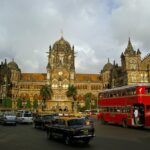
Then you hit Chhatrapati Shivaji Maharaj Terminus, the UNESCO World Heritage railway station. You’ll also hear its former name: Victoria Terminus, often shortened to VT.
This stop is mostly about perspective. It’s a major city icon, and it anchors your day in Mumbai’s wider “big history” story—industrial growth, global connections, and the kind of infrastructure that pulls communities into the same geography. When you place Jewish heritage in that setting, it stops feeling like a side story.
Time-wise, you’ll spend about 30 minutes here. That’s enough to enjoy the station’s scale and frame the rest of your stops, without turning your day into a derailment.
Bene Israel worship sites: Shaar Harahamim and Share Rason
Now the tour shifts to Bene Israel sites in a way that feels deliberate. You’ll visit Shaar Harahamim (The Gate of Mercy Synagogue), described as built in 1796 and established by the Bene Israel community. The tour also flags that it’s one of the oldest synagogues in Mumbai.
This stop is short (listed as about 5 minutes), so don’t treat it like a deep-study stop. Instead, use it for recognition. The name and the date are the whole point: this is a landmark you can file under Bene Israel’s enduring presence.
After that, you’ll go to Share Rason Synagogue (Bene Israel), described as the second-oldest Bene Israel synagogue in Mumbai, built in 1843. The tour explains that it was created due to a split in management of an earlier synagogue, Shaar Harahamim.
That split detail is surprisingly important. It tells you communities aren’t static. Even within the same broad tradition, leadership and structure can change. When you learn why a synagogue exists, the building starts carrying meaning beyond appearance.
This stop is listed at about 15 minutes. It’s a good length for learning the key story beat without feeling like you’re rushing.
Magen Hassidim Synagogue: the largest Bene Israel site still in use
Next is Magen Hassidim Synagogue, described as the largest of the Bene Israel buildings and still operational with a small congregation.
This is one of the most powerful contrasts in the whole day: older buildings, changing communities, and then one site that remains alive with a present-day congregation. The tour doesn’t present it like a relic behind glass. It comes across as a living place, even if the number of worshipers is small.
Time here is about 15 minutes. If you’re the type who likes to look slowly—read names, observe doors, take a step back—you’ll want a quiet minute. A private format helps with that.
Chabad at Nariman House: an outreach stop with admission included
The final major stop is Chabad India at Nariman House in the Colaba area. The building is described as a five-storey landmark and specifically as a Nariman House Chabad house—an outreach center.
Unlike many of the synagogue visits, the tour lists admission here as included. That’s a nice payoff at the end of the day: you get a meaningful, contemporary institutional presence without extra ticket wrangling.
Time is about 30 minutes. Think of this as a bridge: you’ve spent the morning learning how Jewish communities appeared and organized across centuries. This stop helps you see how Jewish life also continues through organized outreach and community support in modern Mumbai.
What you get for the $86 private-group price
The tour price is $86.00 per group, up to 2 people. On the face of it, that’s not a “cheap” sightseeing add-on. But look at what’s included:
You get a local English-speaking guide, pickup and drop, air-conditioned vehicle, toll/tax/parking fees, and bottled water. You also get a mobile ticket, which helps reduce friction at start time.
Now, the trade-off: several synagogue stops list admission as not included. So your total spend may creep a bit higher depending on which places you enter and the on-site fees. Still, a guided route can be worth it in cities like Mumbai, where sorting logistics and location timing eats energy.
The biggest value is the small-group nature. For two people, you’re paying more than a public group tour, but you’re gaining time with your guide and fewer compromises. That matters most on heritage tours, where the details are the whole point.
The pacing: expect short visits and good direction
This is built as a “half-day” that still covers a lot of ground. Many stops are around 30 minutes, while a few are shorter—especially the Gate of Mercy synagogue segment (about 5 minutes), and the later Bene Israel sites (about 15 minutes each).
So yes, you’ll be moving. But you’re not sprinting between unrelated places. The order is structured so the information builds: you start with older Sephardic context, move into major synagogue presence, then focus on older Bene Israel sites with specific historical markers, and close with Nariman House and Chabad’s modern outreach presence.
If you like slow museum-style touring, you might want more time at each stop. That said, the private format gives you a chance to ask your guide what to prioritize if you’re short on time.
Who this tour suits best
This tour fits best if you want:
- a guided introduction to Jewish heritage in Mumbai (not just photos outside buildings)
- a route that compares Sephardic and Bene Israel communities without needing a complicated itinerary plan
- a comfortable transport setup with air-conditioning and pickup/drop, especially if you’re sensitive to heat or long rides
- a day plan that still leaves you time to see other Mumbai highlights later
If you’re someone who hates any structure and prefers total freedom, this may feel a bit tight. But if you’re curious and you want clarity fast, you’ll probably enjoy the way the guide connects the dots.
Quick verdict: should you book this Mumbai Jewish heritage tour?
I’d book this if you’re visiting Mumbai with a real interest in heritage you can understand in a few hours. The strength is the mix: older synagogues, a public-history anchor in David Sassoon Library, and a big-city landmark in Chhatrapati Shivaji Terminus, capped with Nariman House/Chabad.
I’d hesitate only if you have zero interest in synagogue history or if you absolutely need all admissions to be included. Since several stops aren’t listed as included, your final costs may be slightly higher than the base tour price.
FAQ
What’s the duration of the Half-Day Mumbai Jewish Heritage Private Guided Tour?
The tour runs about 5 to 6 hours.
How much does the tour cost and how many people can it include?
It costs $86.00 per group (up to 2 people).
What time does the tour start in Mumbai?
The start time is 9:00 am.
Does the tour include pickup and drop-off?
Yes. Pickup & drop are included.
Are entry tickets included for all the synagogues?
No. Admission is listed as not included for several synagogue stops, while some stops are listed as free and Chabad at Nariman House is listed as included.
Is this tour only for my group?
Yes. It’s a private tour/activity with only your group participating.