REVIEW · MUMBAI
Cultural & Heritage Tour Of Mumbai 01 Day
Book on Viator →Operated by TRAVEL ASTU PRIVATE LIMITED · Bookable on Viator
One day is enough for Mumbai’s big stories. This private tour hits the city’s heritage landmarks fast, with your own guide’s commentary and air-conditioned round-trip transport as you hop stop to stop. I like that it’s built for questions and your pacing, not a rushed slideshow. One thing to consider: the schedule is tight, so you’ll want to keep moving and stay flexible.
You’ll start with a pickup in Mumbai (airport or your address), then spend about 8 hours seeing the city’s most recognizable monuments and a few spots that feel more local than postcard. And yes, unlimited mineral water is included, which matters in Mumbai’s heat.
In This Review
- Key Things to Know Before You Go
- Getting Met in Mumbai and Moving in Air-Conditioned Comfort
- Prince of Wales Museum: Your First Culture Stop, With Momentum
- Mumbai Fort North of Colaba: Old British Power, Still Visible
- Marine Drive: Reclaimed-Sea Promenade and Classic City Views
- Gateway of India: The Archway That Starts Many Journeys
- Flora Fountain / Hutama Chowk: Mumbai’s Piccadilly-Circus Energy
- Chhatrapati Shivaji Maharaj Terminus (Victoria Terminus): Gothic Meets India
- Rajabai Clock Tower and Mumbai High Court: Stone with Opinions
- Dhobi Ghat: Laundry Life, Up Close and Personal (In a Good Way)
- Fitting It All Into 8 Hours: Timing Matters in Mumbai
- Price and Value: What $75 Buys You in Real Terms
- The Best Way to Use This Tour: Ask Smart Questions at Each Stop
- Who Should Book This Mumbai Day Tour?
- Should You Book This Mumbai Day Tour?
- FAQ
- Is this tour private or shared?
- How long is the Mumbai cultural and heritage tour?
- What does the tour include for transportation and comfort?
- Where does the tour pick you up?
- Do I need a passport?
- Can I cancel and get a refund?
Key Things to Know Before You Go
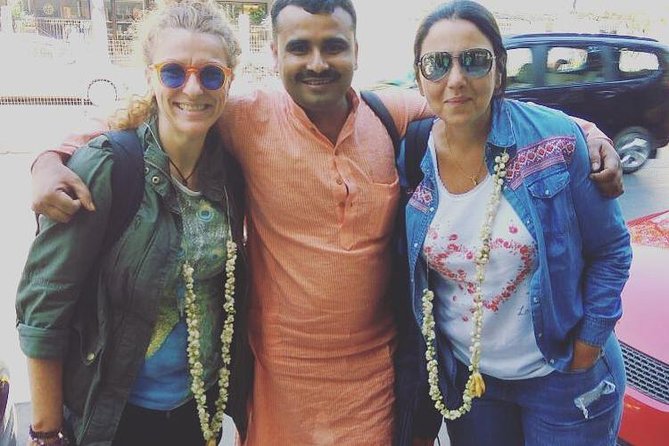
- Private for your group only: no mixing with strangers, so it’s easier to ask questions and take pauses.
- Air-conditioned, round-trip transport: it’s a practical way to cover a lot in a single day.
- A strong lineup of landmarks: Gateway of India, Marine Drive, Chhatrapati Shivaji Maharaj Terminus, and Dhobi Ghat.
- Guide-led context, not just photos: the stops come with explanations that help you connect the buildings to Mumbai’s story.
- Unlimited mineral water: a small perk that keeps the day comfortable.
- A timing strategy for real traffic: you’ll be set up for a smoother day by doing the busiest touring earlier.
Getting Met in Mumbai and Moving in Air-Conditioned Comfort
The best part of this tour is how it removes the stress. You’re met on arrival at the airport or at your address by a TravelAstu representative. Then you’re in a car for the day, with air-conditioning and round-trip transportation built in. In a city where traffic can mess with your energy, that’s not a luxury move. It’s the difference between a fun day and a day that feels like work.
You also get a mobile ticket, and confirmation comes at the time of booking. That means you’re not scrambling for paper when you arrive, and you can focus on being outside and actually looking at the city.
This day tour is about motion plus meaning: you’ll drive between stops, but you’ll also stop often enough to really see details up close. Think: architecture, street junctions, and the kind of everyday system you might otherwise only notice from a distance.
You can also read our reviews of more tours and experiences in Mumbai.


Prince of Wales Museum: Your First Culture Stop, With Momentum
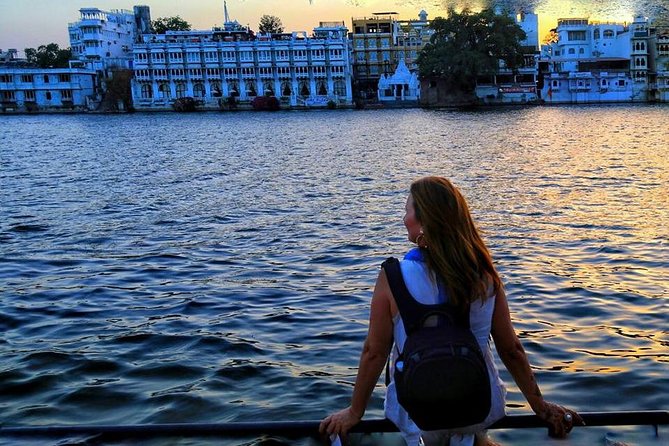
Your sightseeing begins at the Prince of Wales Museum. Starting with a museum makes sense on a one-day schedule. It gives you context before you start moving through the city’s major public spaces and monuments.
Here’s the practical value: museum time tends to slow you down just enough to understand what you’re about to see. After that, you’re not just ticking off sights—you’re learning how Mumbai developed its mix of communities, power, and influence. If your guide is doing things the way people with TravelAstu often describe, you’ll also have room to ask follow-up questions rather than staying stuck in passive listening mode.
One small note for your expectations: museum stops can vary in how long you want to spend inside, depending on your interests and the day’s pace. This tour is private, so you’re better positioned to adjust than with a fixed group.
Mumbai Fort North of Colaba: Old British Power, Still Visible
Next up is the area known as Mumbai Fort, north of Colaba. The reason this district has that name is straightforward: an old British fort once stood here. But what you’ll notice isn’t the fort itself—it’s the buildings from Mumbai’s golden period that still mark the area with a sense of grandeur.
This stop is great if you like the “how the city got shaped” angle. Mumbai Fort isn’t just pretty architecture; it’s a reminder that the city’s early commercial and colonial expansion left long shadows. Even if you’ve never studied Indian urban history, a guide can point out what to look for so it feels more like understanding than sightseeing.
A consideration: this kind of area can look best when you take your time, and in a day tour you may not have unlimited wandering space. Still, the payoff is that you’re seeing a central slice of Mumbai’s transformation without needing multiple days.
Marine Drive: Reclaimed-Sea Promenade and Classic City Views
Then you head to Marine Drive, one of Mumbai’s most famous thoroughfares. It was built in the 1920s and 30s on land reclaimed from the sea, which is a detail I love because it gives you a built-in explanation for what you’re seeing. You’re not just standing near a famous road—you’re looking at a stretch of city made possible by reshaping the coastline.
Marine Drive is also one of those places where architecture, street scale, and ocean-adjacent vibes all collide in a way that feels unmistakably Mumbai. Even if you’re not a “photo person,” it helps you get the geography of the city quickly. You start to understand how neighborhoods connect and why the waterfront has always mattered.
If you want the best experience, plan to walk slowly during stops here. The road looks simple, but the details—light, building lines, and perspective—take a moment to register.
Gateway of India: The Archway That Starts Many Journeys
Mumbai’s principal landmark is the Gateway of India, a huge archway on the water’s edge at Apollo Bunder. The tour’s explanation is clear and useful: it commemorates the visit of the first British monarch and his wife—King George V and Queen Mary—in 1911.
That historical hook matters because it turns the monument from a dramatic backdrop into something with a reason to exist. You can also tell instantly why this place became a starting point for exploration. It’s big, recognizable, and located where people naturally gather—so your sense of where you are in the city locks in fast.
A drawback to consider: this is a landmark, so it can feel like the world’s camera stand. The fix is to lean into the guide-led info and look beyond the obvious arch shot. Focus on what the structure means and how the setting frames the walkway and water.





Flora Fountain / Hutama Chowk: Mumbai’s Piccadilly-Circus Energy
In the heart of the city, you’ll stop at Flora Fountain, also known as Hutama Chowk. It was erected in 1869 in honour of a British Governor of Bombay—Sir Brtle Frere—and it marks a junction of five streets. That’s why it’s been nicknamed the Picadilly Circus of Mumbai.
If you like street-level city design, this is a strong stop. The fountain is described as dull stone with a figure of the Roman Goddess of flowers at the top. Its corners are decorated with mythological figures, so even though it’s a single focal point, it rewards you for looking all around.
Practical tip: don’t only stare at the center. Take a slow lap around the fountain and watch how the five streets radiate. It helps you understand how Mumbai organizes movement at street level—where people cross, how they pause, and why this junction became a known meeting spot.
Chhatrapati Shivaji Maharaj Terminus (Victoria Terminus): Gothic Meets India
One of the most impressive stops is Victoria Terminus, now known as Chhatrapati Shivaji Maharaj Terminus. At this site, the tour notes that there was originally a Koli temple to Mumba Devi, and today the grand station stands as one of Mumbai’s most prominent buildings.
What I really like here is the architectural explanation you’re given:
- It combines Gothic and Indian influences.
- It was completed in 1885.
- Work began in 1878.
- The architect noted is F.W. Stevens.
- The frontage is described as over 15,00 feet.
That’s a lot of details for one stop, but in a one-day tour, those are exactly the kinds of facts that help you see the building differently. Instead of thinking of it as just a railway station, you start seeing it as a statement—about engineering, prestige, and the role of transport in an expanding city.
A consideration: railway-area traffic and pedestrian flow can be intense near stations. The tour’s private transport helps, but still expect to move carefully and stay aware of your surroundings.
Rajabai Clock Tower and Mumbai High Court: Stone with Opinions
Next you’ll see Rajabai Clock Tower, situated at the gardens of the Bombay University building. The tower rises above the library portion and is described as 280 ft tall, with five elaborately decorated storeys. Even if you don’t memorize every architectural element, that height and the multi-level design make it a powerful visual moment.
Right beside it is the Mumbai High court, an attractive building in early English Gothic style near the Oval Ground. The tour description highlights statues representing Justice and Mercy surmounting the central structure. That kind of symbolic detail is the difference between looking at a building and understanding the message built into it.
This section is a good break from waterfront and street corners. It brings you into institutional Mumbai, where you can sense the city’s formal power structures.
Dhobi Ghat: Laundry Life, Up Close and Personal (In a Good Way)
Finally, you’ll visit Dhobi Ghat, one of Mumbai’s unique features. The tour describes the dhobi as a traditional laundryman who collects dirty linen, washes it, and returns it neatly pressed to your doorstep for a small cost. The laundries are called ghats, and the wash areas are row after row of concrete wash pens, each fitted with its own flogging stone.
Even if you’ve seen laundry operations in other cities, Dhobi Ghat hits differently because it’s not tucked away in a back room. It’s visible, active, and tied to daily life.
Here’s the respectful approach I’d recommend: treat this as work you’re observing, not a show you’re entitled to. Keep your tone calm, don’t hover too close, and let your guide handle context. If the day is humid, you’ll also appreciate having already had water and transport sorted earlier.
This stop is the one that often makes a one-day tour feel real. The big monuments are unforgettable, but Dhobi Ghat gives you the texture of how Mumbai runs.
Fitting It All Into 8 Hours: Timing Matters in Mumbai
The route is designed for a single day and hits a lot of ground. That’s great, but you’ll enjoy it more if you understand one simple reality: Mumbai traffic can get hectic in the afternoon.
So take the tour on its likely strengths. Do the sightseeing earlier when possible, and keep your later time flexible. You’ll also want a calm mindset for driving days—expect stop-and-go moments, and treat them like the price of seeing a whole city rather than only a neighborhood.
The private setup helps here. Instead of fighting with a group pace, you can follow your guide’s timing and ask for small adjustments. If your guide suggests rearranging a stop order based on conditions, it’s not chaos—it’s practical.
Price and Value: What $75 Buys You in Real Terms
At $75 per person, you’re not paying just for entry-level sightseeing. You’re paying for coordination: airport or address pickup, private round-trip transportation with air-conditioning, a dedicated guide, unlimited mineral water, and a plan that packs multiple heritage stops into about 8 hours.
The private part is the biggest value lever. If you’ve ever done group tours where you can’t ask questions or where the loudest person decides the pace, you’ll recognize why private routing feels worth it—even at a modest price.
You also get mobile ticket convenience, plus the tour notes group discounts. That’s especially relevant if you’re traveling with friends or family and want your own bubble.
The only value-risk is standard for a one-day heritage run: if you prefer slow strolling and long museum sessions, you may feel slightly pressed by the schedule. But if you want a strong introduction to Mumbai’s landmarks, this is priced and structured to do that.
The Best Way to Use This Tour: Ask Smart Questions at Each Stop
Since this is a private tour, the real advantage is that your guide can tailor the day to your interests. Here are questions that work well with these specific stops, without turning the day into an interview:
- For the Gateway of India, ask what story the monument was meant to tell in 1911.
- For Marine Drive, ask why reclaimed land changed how the city grew along the water.
- For Chhatrapati Shivaji Maharaj Terminus, ask what features show the mix of Gothic and Indian influences.
- For Dhobi Ghat, ask about daily logistics—how the ghats function as a system.
And from what’s been highlighted in past experiences, guides like Jay and Laxman have been praised for being attentive and helpful, with at least some guides noted for Spanish-language guidance. If you share your preferred language or interests early, you’ll likely get better explanations and a smoother day.
Who Should Book This Mumbai Day Tour?
This tour is a good fit if you:
- Want a single-day introduction to Mumbai’s heritage landmarks.
- Prefer private, guide-led learning over random walking.
- Appreciate seeing architecture and city planning details, not just snapping pictures.
- Like having transport handled so you spend energy on the sights, not navigation.
It’s also a solid choice for first-time visitors. The stops cover major public spaces and iconic monuments, plus one genuinely working-life site in Dhobi Ghat. That mix helps you get your bearings fast.
If you’re the type who hates moving schedules, you might find the pacing intense. But with private setup, you can usually slow down at the stops that interest you most.
Should You Book This Mumbai Day Tour?
I’d book it if you want the most sense-per-hour from Mumbai’s landmark circuit. The private transport, air-conditioning, and guide context turn $75 into a day that feels planned instead of improvised. The standout benefit is that you’re not only seeing monuments—you’re also getting explanations that help them click.
Skip it only if you’re chasing a slow, unstructured day with lots of free time for wandering and you’d rather return later for the sites one by one. For a focused heritage sampler, this does the job well.
If you do book, do this: tell your guide what you care about most—architecture, city history, or everyday life—and use Dhobi Ghat as your reality check stop. It’s where Mumbai stops feeling like a postcard and starts feeling like a living city.
FAQ
Is this tour private or shared?
It’s a private tour/activity. Only your group will participate.
How long is the Mumbai cultural and heritage tour?
The duration is about 8 hours.
What does the tour include for transportation and comfort?
You get private round-trip transportation with air-conditioning, plus unlimited mineral water.
Where does the tour pick you up?
You can be met on arrival at the airport or from your address in Mumbai.
Do I need a passport?
Yes, a current valid passport is required on the day of travel.
Can I cancel and get a refund?
Yes. You can cancel up to 24 hours in advance for a full refund. If you cancel less than 24 hours before the start time, the amount paid is not refunded.