REVIEW · MUMBAI
Jewish Heritage and Mumbai Highlights Private Full-Day Tour
Book on Viator →Operated by Jewish India Tours · Bookable on Viator
Mumbai tells Jewish stories on the move. This private, full-day-style tour in just about 5 hours strings together synagogues, community life, and major Mumbai sights in a way that feels personal—not like a checklist. You get context for how Jews lived alongside Hindu and Muslim neighbors, plus real stops tied to well-known Mumbai families and institutions.
I love the focus on synagogues still active today, especially the Magen David Synagogue with its daily minyan. I also like that you’re set up to meet community members and hear lived-in stories, not just dates on plaques.
One thing to consider: this is short on-site time per stop, and lunch isn’t included, so plan to eat before or after the tour.
In This Review
- Key things worth knowing before you go
- A day built around Jewish life in Mumbai, not just monuments
- Victoria Terminus: starting with Mumbai’s biggest “impressive” landmark
- Magen David Synagogue: daily minyan and a living rhythm
- Tiphereth Israel Synagogue: an active Jewish center in motion
- Keneseth Eliyahoo Synagogue (1884): Jacob Sassoon’s memorial story
- Community storytelling you can actually use
- Dhobi Ghat: seeing Mumbai’s laundry culture in an open-air setting
- Mani Bhavan Gandhi Museum: connecting the day to Mumbai’s moral storytelling
- Sassoon legacy at the David Sassoon Library and Reading Room
- Gateway of India: finishing with harbor views and a big-city reset
- Price and time: what $106.87 buys in real life
- Your guide experience: Hanna or Joshua-style storytelling (when available)
- Who should book this Jewish heritage tour
- Should you book this tour?
- FAQ
- How long is the tour?
- Is pickup from my accommodation included?
- Is lunch included?
- Are there entry fees for the stops?
- What time does the tour start?
- Is this a private tour?
Key things worth knowing before you go

- Daily minyan at Magen David Synagogue gives you a rare window into living practice, not just architecture.
- Multiple synagogue visits around the Fort area help you compare different styles and community rhythms in one day.
- Meet-and-tell moments with community members add the human layer that makes heritage tours click.
- Dhobi Ghat + Mani Bhavan keeps the story of Jewish Mumbai connected to wider Mumbai life and its moral compass.
- Pickup, bottled water, and an air-conditioned vehicle make the schedule workable in real city traffic.
A day built around Jewish life in Mumbai, not just monuments
If you only think of Mumbai as a film-and-city-skyline place, this tour gently corrects that. It’s designed around Jewish community life—where you go, what still functions today, and how Jewish families shaped parts of the city, especially around the Fort area. The big idea is simple: you’re not just looking at places; you’re hearing how people lived and worshiped beside their neighbors.
I like how the tour frames the story through people. It’s not only about synagogues; it also includes time for meeting Jewish community members and learning from firsthand accounts. That human thread shows up in the way guides explain local connections and customs you might otherwise miss.
Just as important, you get classic Mumbai highlights too. You’ll see Victoria Terminus (the grand railway station area), then later the Gateway of India viewpoint by the harbor. The result feels balanced: Jewish heritage on one side, major city context on the other.
You can also read our reviews of more tours and experiences in Mumbai.



Victoria Terminus: starting with Mumbai’s biggest “impressive” landmark
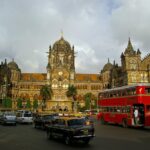
The tour begins with a drive past Victoria Terminus and nearby Victorian-era buildings. You’ll also pass Mumbai University and the Victoria Terminus Railway Station, a location that’s been used in popular film. This opening move matters because it sets the tone: Mumbai’s Jewish story didn’t happen in a quiet corner; it developed inside a city that was actively expanding and modernizing.
You’ll usually get a short look around the station area, then move on quickly. That’s a good match for a 5-hour schedule. If you’re the type who likes to read every plaque and linger for photos, you might find the pace brisk—but it keeps you from burning the day on travel time.
The best way to use this start is to treat it as your orientation moment. From here, the rest of the day makes more sense, since you’re heading toward the older, more tightly connected parts of the city where many historic synagogues and Jewish institutions cluster.
Magen David Synagogue: daily minyan and a living rhythm
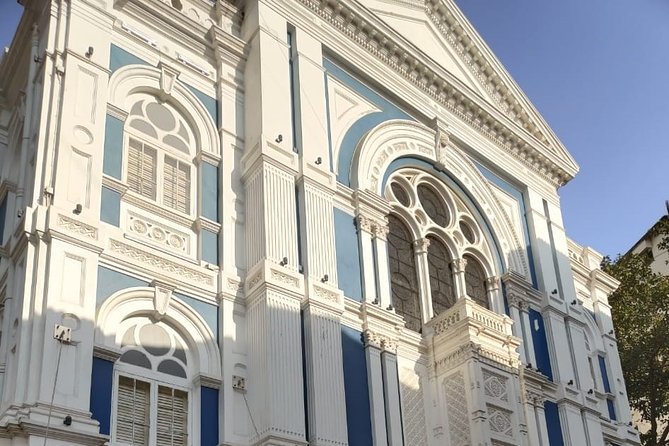
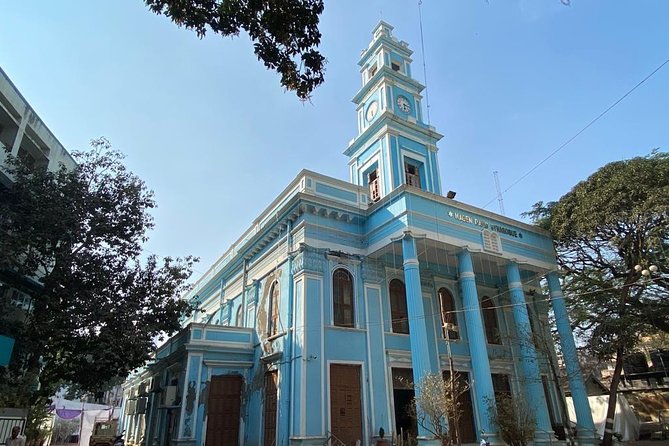
The first major Jewish stop is Magen David Synagogue. This is the one detail you should circle in your head: it’s described as the only synagogue in this set-up with a daily minyan. That matters because a minyan isn’t just a “service”; it’s the community’s daily heartbeat. Seeing a place where that practice happens regularly changes how you read the whole day. It turns the tour from heritage viewing into heritage understanding.
Expect a short visit and time for the guide to explain what makes this synagogue significant in Mumbai’s Jewish community. You may also get background on how Jews maintained their religious routines while living in a city with multiple faith communities.
Because synagogue hours and access can vary, keep your expectations flexible. What you can count on is the tour’s focus on active Jewish centers, not “closed doors and photos from outside.”
Tiphereth Israel Synagogue: an active Jewish center in motion
Next comes Tiphereth Israel Synagogue, described as one of the city’s most active Jewish centers. The point here isn’t just the building. It’s the idea of activity—community life that keeps moving even as the city around it changes.
In practice, your time is limited (about 30 minutes), so your best move is to focus on what the guide highlights: how this place functions within community life, and how the synagogue connects to broader Jewish identity in Mumbai. If your goal is to understand how Jewish life stays organized and meaningful in everyday terms, this stop delivers.
This is also where hearing personal stories helps most. The tour includes the chance to meet members of the Jewish community and get their accounts first hand. If you’re lucky enough to interact during this portion, you’ll likely walk away with details you can’t get from guidebooks.
Keneseth Eliyahoo Synagogue (1884): Jacob Sassoon’s memorial story
Then you head to Keneseth Eliyahoo Synagogue, built in 1884 by Jacob Sassoon in memory of his father, Elias Sassoon. That kind of detail does more than decorate the facts. It shows you how families used religious buildings to preserve memory, status, and faith across generations.
The stop is described as especially magnificent in the Fort area. Even with short time on site, you’ll likely notice the way the synagogue contributes to the city’s older architectural character. This is one of those times where the guide’s explanations can be as valuable as the building itself—because you’ll understand what the construction was meant to communicate.
If you care about architecture, you’ll probably enjoy comparing it to the other synagogues you visited earlier. Even if your head is spinning from dates and names, try to hold onto one theme: these places are evidence of long-term community presence.





Community storytelling you can actually use
One of the most praised parts of this tour is the emphasis on hearing personal stories and family experience from Jewish community members and guides. In past tours, guides like Hanna and Joshua have shared more than facts—Hanna’s style is described as personally connected to Jewish life in Mumbai, while Joshua is remembered as warm, welcoming, and deeply familiar with both Jewish topics and the city itself.
You should treat that as a bonus you might receive, not a guarantee. Still, the overall design of the experience is built around that human exchange. So when a guide or community member shares a ritual or story, lean in. Even a small detail—how people talk about home, worship, or community life—helps you connect the dots between the synagogues and the neighborhoods around them.
Dhobi Ghat: seeing Mumbai’s laundry culture in an open-air setting
Between major heritage stops, the tour includes a stop at Dhobi Ghat, described as a massive outdoor laundry. This break does two things. First, it changes pace so you’re not only absorbing religious and architectural content. Second, it shows you the kind of city culture that surrounds historic Jewish areas—ordinary labor, daily routines, and public work happening in open view.
The visit time is short (about 15 minutes), so don’t expect to become an expert on laundry systems. But do expect a strong sense of scale and how much of Mumbai’s life plays out in public spaces.
If you’re sensitive to heat, plan simple comfort steps: light clothing, water access (you’ll have bottled water), and a quick mindset. Dhobi Ghat can be visually intense, and the best way to enjoy it is to treat it like a quick snapshot of working Mumbai.
Mani Bhavan Gandhi Museum: connecting the day to Mumbai’s moral storytelling
Next up is Mani Bhavan Gandhi Museum, with about 30 minutes to explore. This stop might seem like a detour from Jewish heritage, but it’s there for a reason: it connects you to Mumbai’s broader story of ethics, independence, and public life.
Even if you’re not a deep Gandhi scholar, this museum helps you understand the kind of moral narrative that shaped modern Indian civic identity. And when you pair that with synagogue visits and community storytelling, you start to see the day as more than “religion tour.” It becomes a tour of how communities and values coexist in the same city.
If you like museums, you’ll appreciate the time window being long enough to move around and read key points without rushing nonstop. If you’re mostly into heritage sites, this stop still works because it adds perspective on Mumbai’s cultural framework.
Sassoon legacy at the David Sassoon Library and Reading Room
One of the most meaningful transitions in the tour is the stop at the David Sassoon Library and Reading Room. This library was built in honor of David Sassoon, described as a well-known Baghdadi philanthropist. Names like Sassoon show up in Mumbai history repeatedly, and here you see the physical proof of that philanthropy.
This is another place where your guide’s explanation makes the difference. A reading room isn’t just a pretty building; it represents access to learning, support for community life, and the idea that public institutions can serve private identity. If your interest is in how Jewish community presence shaped parts of Mumbai beyond the synagogue walls, this stop delivers.
Time here is around 20 minutes, so again: focus on the core messages the guide gives you. Take a few photos, but also listen for what the library symbolizes in the wider story of Baghdadi Jews and community contributions.
Gateway of India: finishing with harbor views and a big-city reset
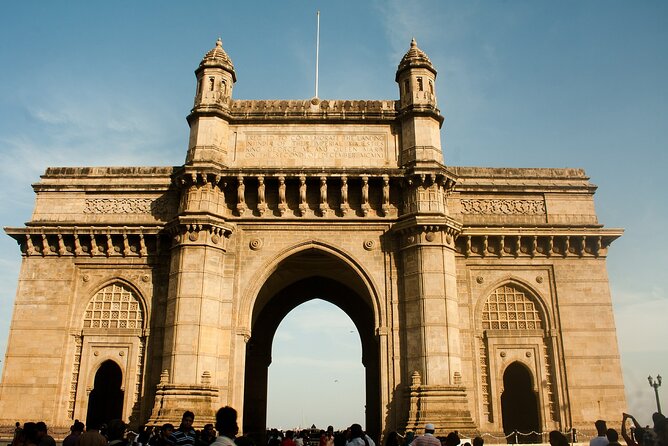
To close, you drive to the Gateway of India, with views overlooking Mumbai harbor. The time is about 30 minutes, which is enough to step back, look out, and let the day’s information settle.
This final viewpoint matters. It gives you a sense of scale. You started in an iconic station area tied to Victorian-era grandeur; you end at a monument that reads instantly as Mumbai in one frame. For me, that’s what makes the tour feel well planned: it ends where you can breathe and see the city rather than only reading about it.
Also, if your guide has shared extra city context during the day, this is a good moment to connect it to what you’re seeing now—the harbor, the monument, and how Mumbai’s skyline sits over layers of community life.
Price and time: what $106.87 buys in real life
At $106.87 per person, you’re paying for a guided, private experience that includes more than just a drive. You get pickup and drop-off from your accommodation, an air-conditioned vehicle, bottled water, and an English speaking guide, plus applicable tax.
What helps the value is that the tour is structured to minimize dead time. With a 9:30am start and about 5 hours total, you’re not trying to squeeze synagogue visits into a chaotic self-guided schedule. And the itinerary is built around stops where admission is free for the places covered.
Two careful notes:
- No lunch is included, so factor in a pre-tour meal or plan to eat after.
- Some days may include extra city points depending on timing (based on guide style and past experiences, a kosher kitchen stop and additional landmarks like the Taj Palace or India Gate have appeared in similar days). Don’t count on extras; do count on the core Jewish sites.
If you’re traveling as a couple or a small group, the private setup can feel more cost-effective than you’d expect, especially if your alternative is hiring multiple taxis or trying to coordinate visits on your own.
Your guide experience: Hanna or Joshua-style storytelling (when available)
The tour’s biggest “feel” comes from the guide. In past experiences, Hanna is remembered for showing not only Jewish sites but also personal family rituals and what it means to be Jewish in Mumbai. Joshua is described as warm, welcoming, and confident with details about both Jewish topics and Indian city life.
You won’t know ahead of time which guide you’ll get, since the local guide is subject to availability. But you can expect an English speaking guide and a focus on clear explanations. And if your guide has a personal connection (as some have described), you’ll likely get more than facts—you’ll get the kind of context that changes how you see a building.
Who should book this Jewish heritage tour
Book it if you want:
- Synagogue-focused Jewish heritage with real context and community storytelling
- A schedule that combines Jewish sites with major Mumbai landmarks
- Pickup, an air-conditioned vehicle, and a guide to handle timing and explanations
Consider a different option if:
- You hate short stop times and prefer long, slow museum hours
- You need lunch handled for you (this experience doesn’t include it)
- You want fully independent control over routes and entry moments
This is also ideal for first-time Mumbai visitors who feel overwhelmed by the sheer size of the city. The day is curated enough to reduce stress, but not so packed that you’re running constantly.
Should you book this tour?
Yes, if your priority is understanding Jewish Mumbai beyond a quick photo. The daily minyan emphasis, the Sassoon-era institutions, and the chance to hear from people connected to the community are the kind of details that stick.
I’d say this is a strong value play too: you’re getting private guiding, transportation, water, and free admissions for the covered stops. Just remember to plan around the missing lunch and expect short visits that rely on your guide to make the time count.
If you want Mumbai with context—and you like faith and community stories presented in plain language—this one fits.
FAQ
How long is the tour?
The tour runs for about 5 hours.
Is pickup from my accommodation included?
Yes. Pickup and drop-off from your accommodation are included.
Is lunch included?
No, lunch is not included.
Are there entry fees for the stops?
The places covered are described as having free admission, so you won’t pay entry fees for the listed stops.
What time does the tour start?
The start time is 9:30 am.
Is this a private tour?
Yes. It’s private, meaning only your group participates.