REVIEW · KATHMANDU
Kathmandu city day tour (4 world heritage sites)
Book on Viator →Operated by Third Eye Adventure P. Ltd · Bookable on Viator
Kathmandu’s sacred circuit saves you time. In one morning-to-early-evening stretch, you hit four UNESCO-listed sites with a license-holding guide, so you’re not just looking at temples—you’re understanding what you’re seeing. The main catch is that admission tickets and fees aren’t included, so plan for extra costs at each stop.
You’ll start around 9:15am and ride in an air-conditioned vehicle with pickup included, then return when the day feels full but not rushed. This is also a private tour, so your group sets the pace—handy when you’re navigating crowds, steps, and holy spaces.
In This Review
- Key highlights worth knowing
- Four UNESCO sights in one Kathmandu day: the value math
- The 9:15am start and how the day stays manageable
- Pashupatinath on the Bagmati River: seeing Hindu ritual with respect
- Boudhanath Stupa: Asia’s biggest Buddhist stupa and a lunch view
- Patan Durbar Square: carvings, temples, and the feeling of a royal city
- Swayambhunath Monkey Temple: icon mix, hilltop views, and timing for sunset
- Your guide: what you gain beyond walking and entry lines
- Price and logistics: what $80 covers, and what to budget for
- Who should book this day tour—and who might want a different pace
- Should you book Third Eye Adventure’s Kathmandu heritage circuit?
- FAQ
- How long is the Kathmandu city day tour?
- What time does the tour start?
- Which World Heritage sites are included?
- Is hotel pickup included?
- Are admission tickets included in the price?
- Does the tour include an air-conditioned vehicle?
- Is this tour private?
- Is there a mobile ticket?
- What’s the cancellation policy?
- FAQ
- Is this tour guaranteed to run every day?
- Is there a tour guide included?
- Is the tour suitable for most people?
Key highlights worth knowing
- Four major heritage stops in one day: Hindu and Buddhist sites, all within about 6 hours.
- A licensed guide who explains what matters: from rituals and symbolism to cultural do’s and don’ts.
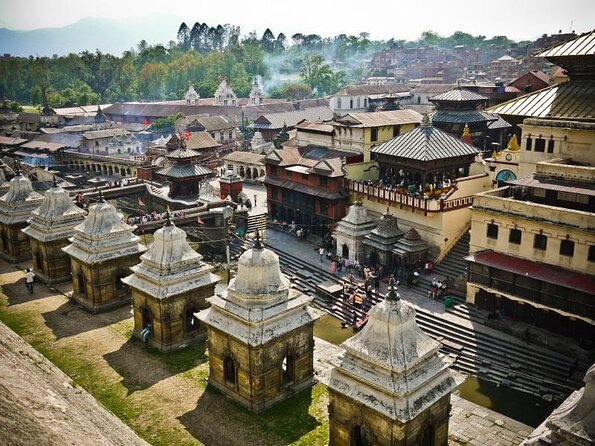
- Pashupatinath by the Bagmati River: a powerful Hindu site tied to cremation traditions.
- Boudhanath’s dome and pilgrim loop: watch everyday practice as people walk around the stupa.
- Patan Durbar Square for carvings and monuments: wood, stone, and metal details across dozens of temples.
- Swayambhunath hilltop views and monkey chaos: a chaotic mix of icons above the city.
Four UNESCO sights in one Kathmandu day: the value math
For first-timers, Kathmandu can feel like a puzzle. Temples are everywhere, but choosing where to go—and in what order—takes time and local knowledge. This day tour solves that. In roughly 6 hours, you cover four of the city’s biggest heritage anchors: Pashupatinath, Boudhanath, Patan Durbar Square, and Swayambhunath. It’s an efficient loop that also gives you variety: cremation-ground Hindu ritual, a major Buddhist stupa square, a royal-city temple complex, then the Monkey Temple perched above Kathmandu Valley.
The price is $80 per person, and what you get for that matters. You’re not paying just for transport; you’re paying for a license holder tour guide and hotel pickup plus an air-conditioned vehicle. That combo is practical in Kathmandu, where heat, traffic, and crowds can chew up your day.
Here’s the balance check: the tour doesn’t include admission tickets or all fees and taxes. That means your final spend will be higher than the headline price, especially since each heritage stop can require its own entry cost. Still, if you’re short on time, the guide-led sequencing is often worth the extra cash. You get context fast, and you waste less time figuring things out.
You can also read our reviews of more tours and experiences in Kathmandu.

The 9:15am start and how the day stays manageable
The tour starts at 9:15am, and the day is paced for a steady rhythm rather than long lingering. Each stop is timed enough that you can see the essentials without feeling trapped for hours in one place. That timing also helps when sites are crowded or when you need time to walk between sections of a complex.
Because this is a private tour, you’re not stuck behind a large group that moves slowly. If your group moves faster, you’ll usually get a bit more breathing room at later stops. If your group needs slower pacing, you can ask the guide to adjust within the day’s plan. That flexibility is one of the best parts of a private format.
Two practical notes for you:
- Bring cash for admissions/fees since those aren’t included.
- Wear shoes you don’t mind on stone steps and uneven surfaces—especially at temple complexes where the walkways are old and compact.
You’ll also have a mobile ticket, which is a small thing but useful when you’re switching between multiple sites in one day.
Pashupatinath on the Bagmati River: seeing Hindu ritual with respect
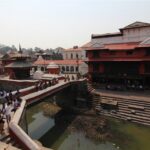
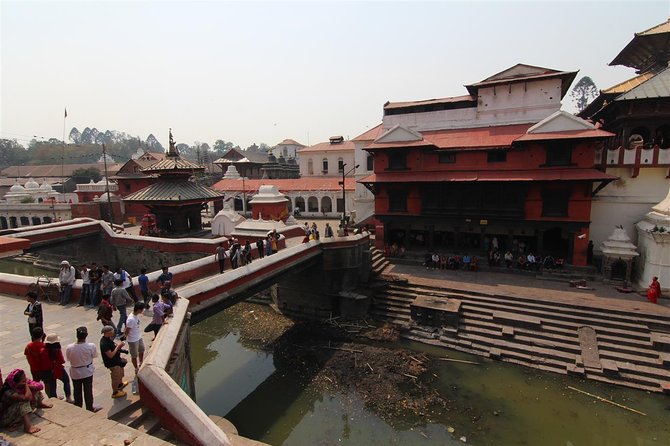
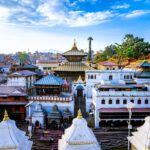
Your first stop is Pashupatinath Temple, Nepal’s most important Hindu sight. It’s on the banks of the holy Bagmati River, and it functions as a cremation ground. That one detail changes the tone of the visit. This isn’t just sightseeing; it’s a working religious site.
The tour time here is about 2 hours, which is good. You need that long if you want to observe without sprinting. You can also take in the riverside atmosphere—how people gather, how the space is organized, and how the temple’s presence connects to the river’s sacred role. A licensed guide helps you make sense of what you’re seeing and how people move through the site.
One consideration: because it’s a cremation area, the environment can feel solemn. Keep your attitude respectful—quiet where it makes sense, and avoid actions that block others’ view of rituals. If you’re photographing, ask your guide about what’s appropriate before lifting your phone.
Also note: admission tickets aren’t included, so you should budget for entry here.
Boudhanath Stupa: Asia’s biggest Buddhist stupa and a lunch view
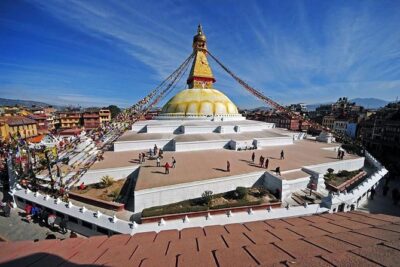
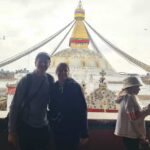
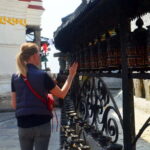
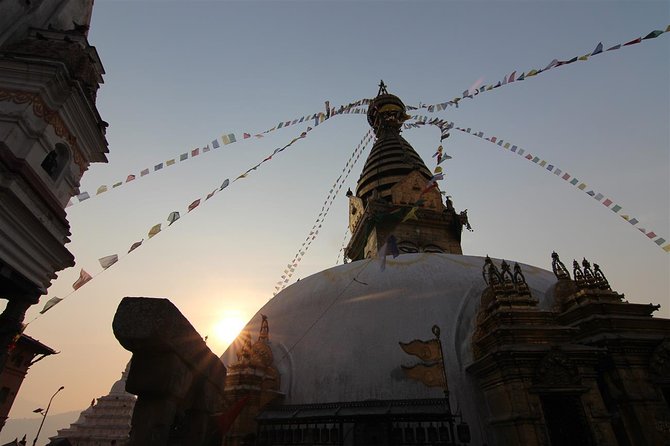
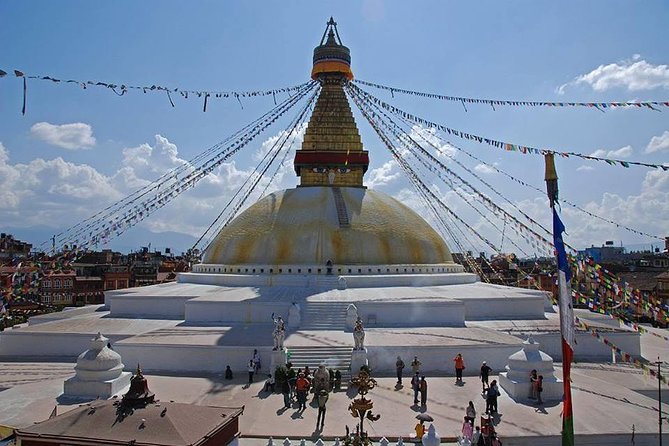
Next comes Boudhanath Stupa, described as the largest Buddhist stupa in Asia. The stupa square is where daily practice becomes visible. You’ll see thousands of pilgrims gather and walk around the dome each day—a repeated movement that turns a monument into something living and active.
You’ll have about 1 hour at this stop, which works well if you don’t get lost. The square can be visually busy, with prayer flags, people moving in steady loops, and shops around the edges. A guide can help you focus on what’s meaningful—how the space is used and what the ritual walking represents.
One of my favorite ways to experience Boudhanath is using the vertical perspective. The tour gives you a chance to go up to a rooftop café for lunch, and you can get a bird’s-eye view of the entire square. That view does two things at once: it helps you understand the stupa’s layout, and it gives you a calmer moment after all the walking and close-up detail.
Admission tickets also aren’t included here, so again, plan for entry costs.
Practical tip: if you’re serious about the view, go to the café promptly after you arrive. Rooftop spots can fill up as people notice lunchtime crowds and start settling in.
Patan Durbar Square: carvings, temples, and the feeling of a royal city
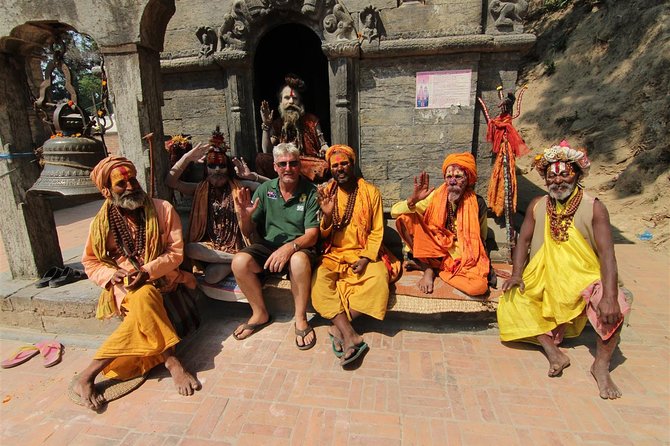
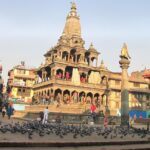
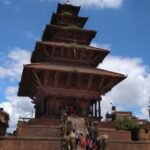
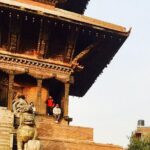
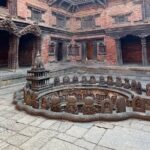
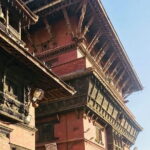
After lunch, the tour shifts to the medieval temples of Patan Durbar Square. Patan is one of the three royal cities in the Kathmandu Valley, and it shows. This is a place where the architecture feels layered—wood and stone carvings, metal statues, and ornate details across a dense cluster of temples.
The tour time here is about 2 hours, and that length is important. Patan Durbar Square rewards slow scanning. You’ll see plenty of Buddhist and Hindu temples, and the area holds over 1200 monuments. That’s a lot to take in, so the guide’s role becomes more than logistics—they help you understand which elements to pay attention to and how the symbols connect to the surrounding faith traditions.
What you’ll likely enjoy most is the texture of the place: carved surfaces and statues that look different once you stop treating them like decoration and start treating them like storytelling. Even if you’re not a deep-architecture person, the sheer density of detail makes Patan feel special.
The main drawback? Because there are so many carvings and corners, it can get crowded and visually overwhelming. If your group wants fewer stops, this is still a strong place to linger a bit, but you’ll need to keep an eye on time for the final hilltop stop.
Admission tickets aren’t included, so factor in entry costs for this complex too.

Swayambhunath Monkey Temple: icon mix, hilltop views, and timing for sunset
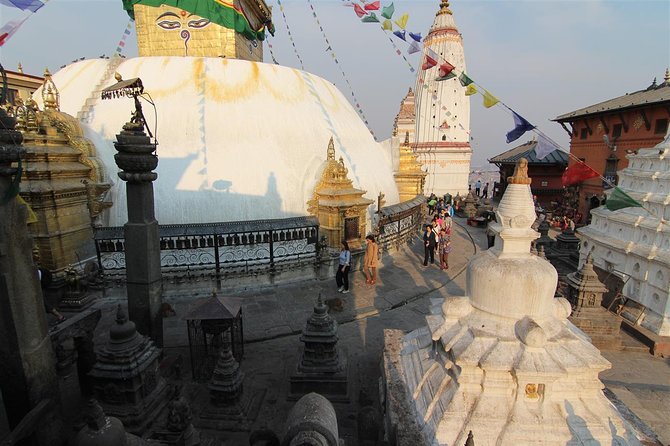
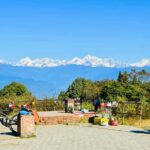
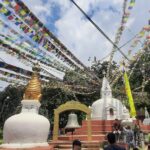
Your last stop is Swayambhunath Temple, often called the Monkey Temple because the hilltop area is famous for monkeys. It’s also set above the city, so you’re not just walking through a temple complex—you’re stepping into a viewpoint.
This stop is timed at about 1 hour, and it works best if you arrive ready to prioritize. The temple is a fascinating mix of Buddhist and Hindu iconography, so you may want to spend a few minutes letting your guide explain what you’re seeing before you start exploring on your own.
Because the monkeys are part of the experience, keep your items secured. That sounds obvious, but it’s worth saying: don’t leave bags open and don’t act like food and snacks aren’t interesting to them. If you keep things controlled, you can enjoy the chaos instead of managing it.
The tour also points you toward the best ending: enjoy the view, and if timing works, catch sunset before heading back. A hilltop viewpoint at the end of the day is a smart close. It gives your day a natural finish and lets you see Kathmandu from a distance, after all the close-up carvings and ritual spaces.
Your guide: what you gain beyond walking and entry lines
This tour runs with an on-the-ground licensed guide, and that’s where the value really shows. In a place like Kathmandu, you can get lost not physically, but culturally. You’ll see temples and symbols, but without context it’s easy to treat everything as decorative. A good guide turns the day into a story you can follow.
In the past, guides associated with this operator have focused on explaining culture, history, and religion in a way that makes the sites easier to read. Some have even added personal touches when the group is interested, such as a sound healing demonstration. There’s also a strong hint that guides can be helpful with photos—so if you’re trying to capture temple scenes without missing the important angles, don’t be shy about asking.
One smart strategy for you: at each stop, ask one simple question early. Something like:
- What’s the main thing I should notice right now?
- What’s the right way to observe here?
- Which detail should I not miss?
You’ll get more out of your limited time, especially with only about an hour at Boudhanath and Swayambhunath.
Price and logistics: what $80 covers, and what to budget for
Let’s talk money in plain terms. The tour costs $80 per person and includes:
- Air-conditioned vehicle
- Licensed guide
- Hotel pickup
- Mobile ticket
It does not include all fees and taxes, and it specifically notes that admission tickets aren’t included at the four stops. So your real total depends on current entry fees and any local charges tied to each heritage site.
Is it still good value? In my view, yes—if you want a guided sweep of the city’s core heritage sites with minimal wasted time. The alternative is doing it on your own: you’d still pay entry fees, plus you’d likely spend extra time coordinating transport, figuring out where to start, and learning basic etiquette at each temple.
If you’re traveling on a tight budget, you’ll just need to remember that the $80 is the base. The admissions and taxes will push you higher. Build that in and you won’t feel surprised mid-day.
Who should book this day tour—and who might want a different pace
This tour is a strong fit if:
- You’re short on time in Kathmandu and want four major heritage stops
- You like a mix of Hindu and Buddhist sites in one day
- You’d rather have a guide handle sequencing and explanations than figure it out yourself
- You prefer the comfort of an air-conditioned vehicle in Kathmandu’s daytime conditions
It might be less ideal if you:
- Want lots of free time at each site for long wandering and slow contemplation
- Plan to do heavy shopping at each stop, since the day is timed
- Feel uncomfortable with solemn spaces (like cremation grounds) even with guidance and respectful observation
The sweet spot is a traveler who wants the big highlights plus context, not a half-day of one complex where the rest of the city sits untouched.
Should you book Third Eye Adventure’s Kathmandu heritage circuit?
If you want a clear, high-impact introduction to Kathmandu, I think this is an easy yes. The mix of Pashupatinath, Boudhanath, Patan Durbar Square, and Swayambhunath covers the main storylines of Kathmandu Valley—Hindu ritual by a sacred river, Buddhist practice around a massive stupa, royal-city temple architecture, then hilltop views and mixed iconography.
The guide and pickup make it feel efficient. The private format makes it feel less chaotic. And the schedule—about 6 hours total—helps you see a lot without ending the day completely fried.
Just go in with one expectation set: the base price doesn’t include admission tickets and fees. Budget a little extra, dress respectfully, and ask your guide what to notice first at each stop. You’ll get a day that feels coherent instead of like a stamp-collecting exercise.
FAQ
How long is the Kathmandu city day tour?
It runs for about 6 hours (approx.).
What time does the tour start?
The start time is 9:15am.
Which World Heritage sites are included?
You visit Pashupatinath Temple, Boudhanath Stupa, Patan Durbar Square, and Swayambhunath Temple.
Is hotel pickup included?
Yes, pickup is offered.
Are admission tickets included in the price?
No. Admission tickets are not included at the stops listed.
Does the tour include an air-conditioned vehicle?
Yes, the tour includes an air-conditioned vehicle.
Is this tour private?
Yes. It’s a private tour/activity, and only your group participates.
Is there a mobile ticket?
Yes. The tour includes a mobile ticket.
What’s the cancellation policy?
Cancellation is free if you cancel up to 24 hours in advance for a full refund.
FAQ
Is this tour guaranteed to run every day?
The experience requires a minimum number of travelers. If it doesn’t meet the minimum, you may be offered a different date/experience or a full refund.
Is there a tour guide included?
Yes, the tour includes a license holder tour guide.
Is the tour suitable for most people?
The tour notes that most people can participate.