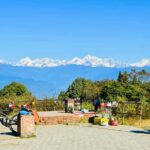
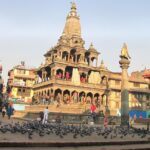
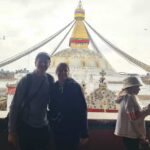
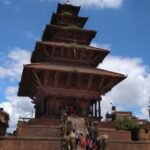
Golden temples, real daily life. This full-day Kathmandu heritage circuit is interesting because you bounce between working religious sites and UNESCO-style historic squares without fuss. I especially like the clear stop-by-stop flow—Pashupatinath first, then hilltop Swayambhunath, and finally the big-city historic center at Kathmandu Durbar Square—and I like that you get a driver/guide plus a short pre-brief at the Mountain Rock Treks office. One thing to consider: entrance fees are mostly not included, so your final total depends on what you’ll pay at each site (and the exact set of heritage stops can vary).
You start at 9:00am with pickup offered, and the group stays small, up to 20 people. There’s a mobile ticket, which makes last-minute logistics less annoying in a city where plans often change.
If you’re planning this as a “soft landing” after trekking, this tour also works well as a culture reset: big sights, manageable time blocks, and a guide to help you understand what you’re seeing.
In This Review
- Key Highlights Worth Noting
- What This Kathmandu Heritage Tour Is Really Like
- Meeting Point, Pickup, and Timing (Why It Matters in Kathmandu)
- Stop 1: Mountain Rock Treks Office Pre-Brief (Get Your Bearings Fast)
- Stop 2: Pashupatinath Temple on the Bagmati River (Shiva, Cremations, and Sacred Belief)
- Stop 3: Swayambhunath Hill Temple (Trees, Views, and Old Kathmandu Feel)
- Stop 4: Kathmandu Durbar Square (Courtyards, Temples, and Dynasties)
- Price and Value: What $105.34 Covers (and What It Doesn’t)
- How to Make This Day Feel Worth It (Instead of Rushed)
- Who This Tour Suits Best
- Should You Book Kathmandu City Heritage (Full Day)?
- FAQ
- What time does the Kathmandu city tour start?
- How long is the tour?
- Are entrance fees included?
- Is pickup included?
- Is food included?
- How many people are in the group?
- What information is needed when booking?
Key Highlights Worth Noting
Pashupatinath admission is listed as free, saving money and time right at a major Hindu pilgrimage site.
Swayambhunath is a hilltop temple with the Tibetan meaning tied to the trees on the slope.
Kathmandu Durbar Square is UNESCO-listed, so you’re seeing a center stage for the Malla and Shah dynasties.
You get a driver/guide plus fuel and facility fees included, which helps keep the day running smoothly.
Expect a short, practical pre-brief at Mountain Rock Treks before you head out to the sacred stops.
What This Kathmandu Heritage Tour Is Really Like
This is the kind of day you plan when you want to see Kathmandu’s “most important” places without turning it into a all-day endurance test. The schedule is built around four major anchors—religious, historic, and very Kathmandu—so you’re not hopping randomly.
You’ll start with a quick meeting and trip pre-brief at Mountain Rock Treks And Expedition Pvt. Ltd. After that, the day becomes a string of short visits spaced to leave you time to look closely, not just pose for photos. It’s a good format for first-timers, and it’s also a solid option if you’ve just returned from trekking and want something different: temples, courtyards, and riverside life instead of altitude and trail dust.
The “full day” label fits the reality. The stop times add up to about 5 hours, but you’ll still have driving time and buffer. So plan on being out for roughly 6 to 8 hours, not just 5 hours and change.
You can also read our reviews of more tours and experiences in Kathmandu.
Meeting Point, Pickup, and Timing (Why It Matters in Kathmandu)
Your start time is 9:00am, which is a smart choice in Kathmandu. Morning light is nice for photos, and you’ll generally get a calmer feel before crowds fully stack up later.
Pickup is offered, and the tour is set up for a medium-sized comfort zone: maximum 20 travelers. That cap matters. With a larger group, you spend more time waiting and less time watching. Here, the small-group limit usually means you can move at a guide-friendly pace, not a herding speed.
You also get a mobile ticket, which is genuinely helpful. Paper can get lost, phones rarely do. Just make sure your ticket details are accessible offline if you know your phone’s data will be patchy.
One more practical note: at booking time, you’re asked for passport name, number, expiry, and country for all participants. That’s not “extra”; it’s part of how the provider confirms details. If you’re traveling with a partner or group, double-check the spelling so your name matches your passport exactly.
Stop 1: Mountain Rock Treks Office Pre-Brief (Get Your Bearings Fast)
Before temples and squares, you’ll spend about 15 minutes at the Mountain Rock Treks And Expedition Pvt. Ltd. meeting point for a pre-briefing. Admission ticket isn’t included here, which makes sense—you’re not paying to sit in a chair and get orientation.
This is the moment to ask the simple stuff that saves you time later:
- What route are we likely to take today?
- Which sites are optional vs. must-see?
- Are there any entrance payments you should expect you’ll handle on-site?
Based on the way the company answers in feedback, there’s often a real effort to keep solo travelers comfortable. Some clients specifically noted local help from agents like Ketan and team members such as Dipak Pande, which tells me the provider values smooth communication, not just check-the-box guiding.
Stop 2: Pashupatinath Temple on the Bagmati River (Shiva, Cremations, and Sacred Belief)
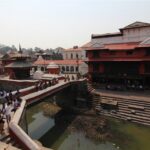
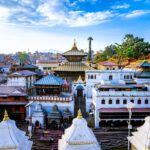
Pashupatinath is one of Nepal’s most sacred Hindu sites, devoted to Lord Shiva. It sits on the eastern outskirts of Kathmandu on both banks of the holy Bagmati River, and the tour gives you about 2 hours here.
This stop is powerful because it’s not staged. It’s a working pilgrimage landscape. The information provided includes details about the river’s role in end-of-life rituals. You’ll learn that many elderly visitors come to spend their last weeks here, and that cremation rites take place on the banks of the Bagmati River. People also hold the belief that dying at Pashupatinath means rebirth as a human, regardless of sins, and that temple astrologers predict the exact death day.
A practical takeaway: if you’re sensitive to the intensity of funeral rites, you’ll still want to come prepared emotionally. At the same time, don’t reduce the site to one scene. It’s also a living place of prayer and devotion, and you’ll see a whole rhythm of daily movement around the temples.
Good news on cost: admission is listed as free. That makes this stop one of the best value segments of the day, because it’s a major site you don’t have to pay for up front through the tour.
Stop 3: Swayambhunath Hill Temple (Trees, Views, and Old Kathmandu Feel)
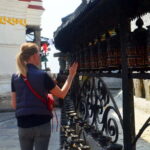
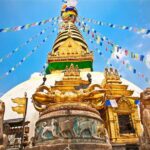
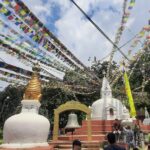
Next up is Swayambhunath, an ancient religious site on a hill in the Kathmandu Valley, west of the city center. The tour allows about 1 hour.
The Tibetan name is explained here as meaning Sublime Trees, tied to the variety of trees on the hill. That’s a small detail, but it’s the kind that helps you “read” the site instead of just scanning for the next photo angle.
Even though the tour time is short, Swayambhunath is the stop where you usually understand Kathmandu’s geography—how the city spreads around the valley, how hills shape what you see, and how old religious places sit above daily life.
Entrance isn’t included for this site, based on what’s listed. That means you should expect some on-site payment. If you’re trying to budget tightly, you can estimate that you’ll likely pay more here than at Pashupatinath.

Stop 4: Kathmandu Durbar Square (Courtyards, Temples, and Dynasties)
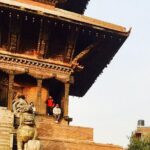
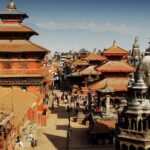
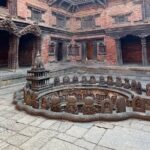
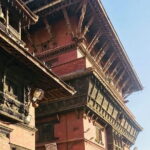
Finally, you’ll reach Kathmandu Durbar Square, also known as Basantapur or Basantapur Durbar Square. This is one of three durbar squares in the Kathmandu Valley and it’s part of the UNESCO World Heritage Sites.
You get about 2 hours, which is exactly what you need for a square like this. It’s not just a single landmark—it’s a network of palaces, courtyards, temples, and shrines. The tour information highlights that the palaces reflect the Malla and Shah monarchs who ruled the valley, which gives you context for why the architecture looks the way it does.
This is the stop where history feels physical. You’ll see how power and religion blended in everyday space: rulers built sites that people could gather around, worship in, and live beside. For a first-timer, this is also where you start making sense of the city beyond “a bunch of temples.”
Admission isn’t included here, so again: plan for entrance fees to appear during the day.
Price and Value: What $105.34 Covers (and What It Doesn’t)
The price is $105.34 per person, and the included items are practical:
- Driver/guide
- Fuel surcharge
- Landing and facility fees
What’s not included:
- Food and drinks (unless specified)
- Entrance fees
- Tips for driver and guide
This is where value comes down to your priorities. If you want someone to handle transportation between sites, interpret what you’re seeing, and keep the day organized, this is fair value for Kathmandu. The built-in guidance matters because the meaning behind what you’re looking at is a big part of why these places feel memorable.
But if you’re the kind of traveler who already loves independent ticketing and you’re strong at negotiating local navigation, you might find cheaper ways to DIY. Still, the day’s flow—four major highlights with a guide—tends to make the pricing feel reasonable.
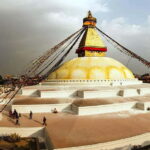
Also, watch for the “which sites exactly” detail. The overview mentions heritage sights including Patan Durbar Square and Bouddhanath, but the day plan you’ll follow here includes Pashupatinath, Swayambhunath, and Kathmandu Durbar Square. That mismatch is worth clarifying at booking so you know whether your itinerary is the “full four” version or a shorter set.
How to Make This Day Feel Worth It (Instead of Rushed)
You’ll get the best day if you treat it like a guided slow walk through Kathmandu’s belief system and civic history.
A few practical ideas:
- Wear layers. Religious sites can be cool or breezy even when the city feels warm.
- Keep your schedule flexible for a respectful pace. Temple days don’t run like museum days.
- Bring a payment plan for entrance fees, since several stops are listed as not included.
- If you’re hungry, don’t wait until the end of the day. Food isn’t included, so plan a simple snack strategy.
Since you’re limited by time, aim for depth in one stop rather than shallow coverage in all four. For many people, that “depth” ends up at Pashupatinath or Durbar Square—both have enough going on to reward your attention.
Who This Tour Suits Best
This fits a wide set of travelers:
- First-timers in Kathmandu who want a structured taste of heritage.
- Solo travelers who appreciate a small-group cap and an operator that communicates clearly. Feedback tied to this provider also points to solo travelers feeling welcomed.
- Trekking add-on travelers. If you’ve just come from the mountains, this helps you switch from trail challenges to city culture without losing momentum.
- People who want a day with a guide/driver rather than figuring everything out street-by-street.
If you’re extremely detail-oriented on architecture or you want a long, slow museum-style day, you might find the pacing fast. But for most visitors, it’s a sensible “see the big things and understand them” format.
Should You Book Kathmandu City Heritage (Full Day)?
I’d book it if you:
- Want major Kathmandu heritage sites in one outing
- Prefer a driver/guide setup with a small group
- Are okay paying entrance fees on-site as needed
- Value context, not just sightseeing checklists
I’d hesitate if:
- You need every last entrance fee included upfront (this one doesn’t)
- You care deeply about exactly which four heritage stops you’ll get, since the overview references more sites than the day plan lists
- You dislike the intensity of sites connected to funeral rites and sacred end-of-life practices
If you do book, ask one key question before you go: confirm whether your itinerary matches the broader heritage set mentioned (including Patan Durbar Square and Bouddhanath) or sticks to the three-stop temple/historic focus. That’s the difference between a good day and a “perfect, exactly what I wanted” day.
FAQ
What time does the Kathmandu city tour start?
The tour start time is 9:00am.
How long is the tour?
It runs for 6 to 8 hours (approx.).
Are entrance fees included?
Pashupatinath Temple is listed as free, but entrance tickets are not included for other stops like Swayambhunath and Kathmandu Durbar Square.
Is pickup included?
Pickup is offered.
Is food included?
Food and drinks are not included, unless specifically stated.
How many people are in the group?
The tour has a maximum of 20 travelers.
What information is needed when booking?
You need the passport name, number, expiry, and country for all participants.