REVIEW · KATHMANDU
Folklore and Everyday Life in Ancient Patan
Book on Viator →Operated by Travel Nextdoor · Bookable on Viator
Patan’s old town tells stories if you know where to look. This walk through ancient Patan follows the everyday faith of Newar Buddhism and Tantric Hinduism across courtyards, shrines, and neighborhood squares. I love how the route stays local—small lanes and open courtyards instead of only the big postcard sites—and how the guide connects spiritual practice to normal daily life.
Two things I really liked: first, the focus on courtyard living at places like Pimbahal and Nyakhachowk, where religion shows up in how space is organized. Second, the way the guide links art and iconography to outside influences—like how Greek and Hellenistic impressions show up in Buddhist and Hindu imagery. One consideration: this tour intentionally skips Patan Durbar Square, so if that’s your main goal, you’ll need a separate visit after the walk.
In This Review
- Quick Hits: What Makes This Patan Walk Worth Your Time
- Walking Patan’s Courtyard Network From Patan Dhoka
- Pimbahal Courtyard: A Monastery With 4,000+ Ordained Monks
- Nyakhachowk: Falchaa, Ancestral Shrines, and Everyday Architecture
- Nagbahaa (Nag Bahal): Where Global Echoes Show Up in Religious Art
- Swotha Square: Wrap-Up With Temples, Shrines, and a Durbar Square Option
- The Guide Factor: Sandip’s Storytelling and Pinhua’s Support
- Duration, Group Size, and Pacing: Plan Around a 2–2.5 Hour Walk
- Tickets and Cost Value: What $65 Gets You
- Logistics in Real Life: Where You Start, Where You Finish
- Who This Walk Suits Best (And Who Might Prefer Something Else)
- Should You Book the Folklore and Everyday Life in Ancient Patan Tour?
- FAQ
- How long is the Patan folklore and everyday life walking tour?
- Where does the tour start and end?
- Is Patan Durbar Square included in the tour?
- What faith and culture topics does the guide cover?
- Are any admissions included during the stops?
- What is the group size limit?
- Do I need pick-up or drop-off?
- What if it rains or the weather is bad?
- Is there a cancellation window?
Quick Hits: What Makes This Patan Walk Worth Your Time
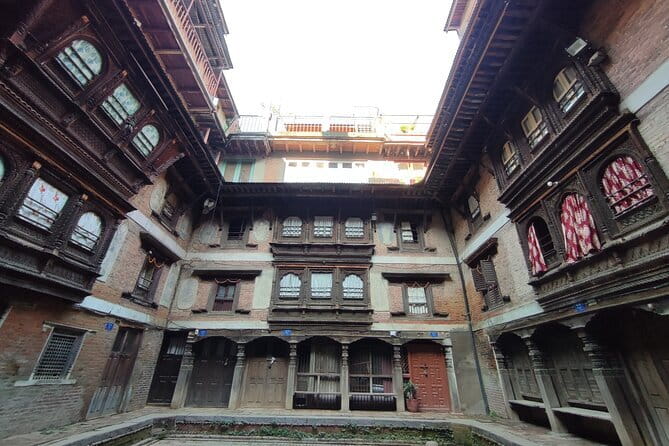
- Courtyard-first route through working monasteries and neighborhood shrines, not just major monuments
- Faith in everyday life: you’ll see how Buddhism and Tantric Hindu practice shape daily rhythms
- Iconography context tied to history, including references to Greek/Hellenistic influence
- Easy pacing for most visitors, with the total walk around 2 to 2.5 hours
- Small group limit of up to 10 people for better Q&A and slower, smarter stops
Walking Patan’s Courtyard Network From Patan Dhoka

You start at Patan Dhoka, the entrance gate area in Lalitpur, and the tour quickly trades wide streets for narrow lanes. The mood changes fast once you’re in the older fabric of town: you’re looking at buildings that sit around open courtyards, with shrines placed like quiet anchors for the neighborhood.
This is the kind of walk that helps you get your bearings fast in Patan. Instead of only chasing famous stonework, you learn how people organized urban space so it supports spiritual life—where family shrines, resting areas, and monastery courtyards all belong to the same system.
You’ll also get a clear plan of where you end up: the tour finishes at Swotha Square, a short walk from Patan Durbar Square. That means you can add the Durbar complex later if you want, without rushing at the end of the tour.
You can also read our reviews of more tours and experiences in Kathmandu.

Pimbahal Courtyard: A Monastery With 4,000+ Ordained Monks
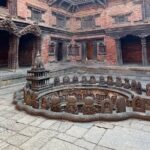
The first major stop is Pimbahal, where the tour shifts from street scenes to a deeper look at courtyard life. The guide focuses on how traditional Patan settlements reflect spiritual practice and local knowledge—how belief isn’t only in temples, it’s built into the neighborhood layout.
At Pimbahal you’re visiting a well-respected Buddhist monastery tied to Newar Buddhist traditions, and it’s associated with more than 4,000 ordained monks as part of the monastic order. You’ll have time to notice fine details too, including intricate woodwork and the way the space is designed for both worship and community life.
One reason this stop matters is that it changes how you see “monastery” in Nepal. Instead of imagining something isolated, you start recognizing monasteries as part of the living city—places people connect to through routines, rituals, and shared spaces.
Tip for your visit: move slowly here. Courtyard architecture rewards patient looking, and the guide’s explanations make more sense when you pause long enough to see where people would gather.
Nyakhachowk: Falchaa, Ancestral Shrines, and Everyday Architecture
From Pimbahal, the route moves along a smaller path where you can see how traditional buildings are arranged around open space. Nyakhachowk is where the tour becomes very practical: you learn what to look for in vernacular architecture and why certain elements exist.
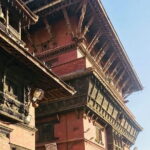
The guide points out features like falchaa, resting areas, plus ancestral shrines and vernacular houses. These are the kinds of details that are easy to miss on your own. When a guide explains them, you start noticing the logic: even “rest points” and small sacred markers fit into the neighborhood’s spiritual map.
Nyakhachowk is also a place to observe how multiple faith expressions coexist in the same urban area. The tour connects the physical structures you see—courtyards, shrines, house layouts—to the belief systems that shape day-to-day behavior.
What to watch for: look at how courtyards open toward shared space. That layout often tells you where social life and devotion overlap.
Nagbahaa (Nag Bahal): Where Global Echoes Show Up in Religious Art
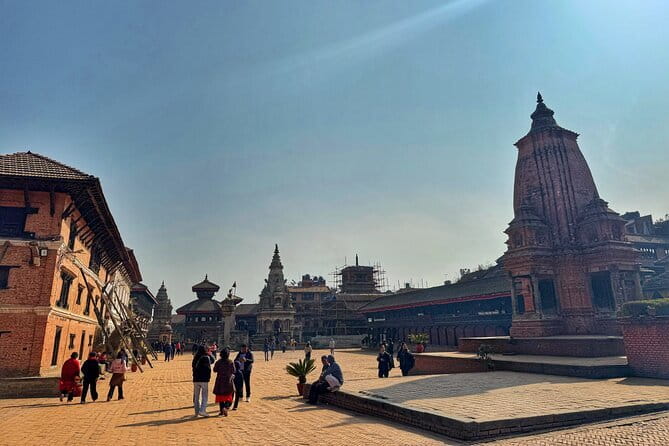
Next you head to Nagbahaa, one of the largest courtyards in old Patan. This is a shorter stop, but it’s designed to give you a big idea: how globalization worked even in ancient times, and how artistic influence can travel far from its original source.
The guide discusses how Greek influence and Hellenistic impressions appear in Buddhist and Hindu iconography. That’s a fascinating claim to hear in a place like Nagbahaa—because once you’re standing in a courtyard that feels very local, the idea of outside artistic currents becomes more than a textbook note.
Even if you don’t memorize icon details, you’ll come away with a clearer way to interpret what you’re seeing elsewhere in the valley. You start thinking: this wasn’t only local invention, it was also adaptation—artists absorbing, reshaping, and making foreign styles fit local religious meaning.
Small caution: since the stop is brief, bring your curiosity, but don’t expect long readings on every carving. The point here is context and pattern recognition.
Swotha Square: Wrap-Up With Temples, Shrines, and a Durbar Square Option
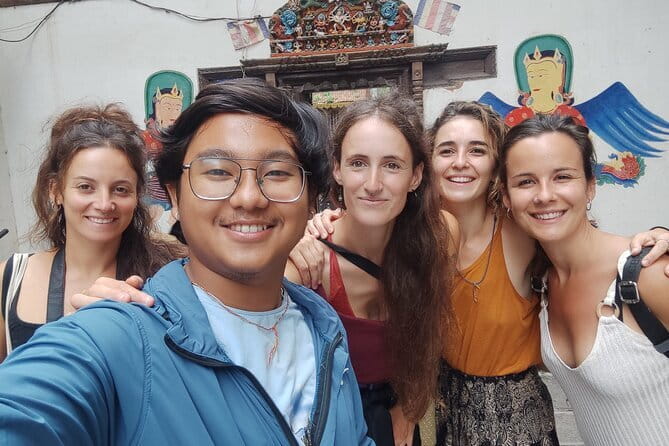
The tour ends at Swotha Square, a calmer landing spot with temples, shrines, and tea shops around the area. It’s a nice finish because you’re not stuck at a monument gate or a parking lot. You’re in a real, usable public space where you can keep exploring at your own pace.
If you want to continue, the guide can help you orient toward Patan Durbar Square afterward. The Durbar complex isn’t included in the walk, and you’ll need tickets and extra admission fees for the museum inside the old palace complex—so plan that as a separate add-on.
This matters for decision-making. If you’re the type who gets satisfaction from smaller, neighborhood stories, you’ll love the end point and the flexibility. If you’re strictly monument-focused, you’ll want to book your Durbar visit time separately so you don’t feel like you’re missing a “main event.”


The Guide Factor: Sandip’s Storytelling and Pinhua’s Support

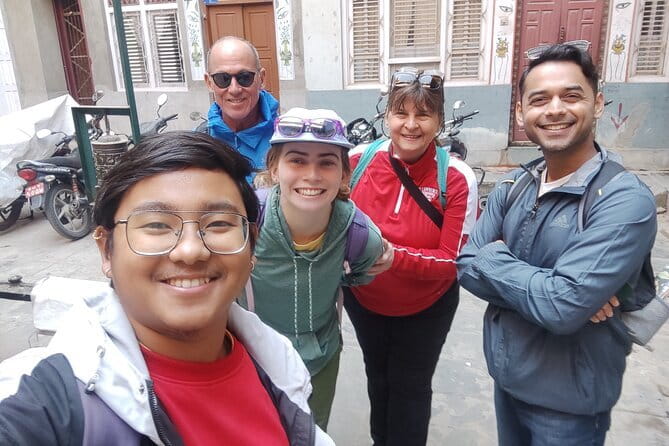
A big part of why this walk is rated so well is the guide’s ability to connect buildings to meaning. In the versions I’ve seen described, Sandip is known for showing people Patan’s less obvious corners and for sharing a lot of local folklore tied to Hinduism and Buddhism.
The explanations don’t feel like lectures. The tone stays friendly and easygoing, and there’s room for questions. One review even highlights humor and lots of laughs during the walk—so if you learn best when you’re not sitting in silence for two hours, this style can work well.
You may also encounter Pinhua alongside the guide, adding extra help and making the experience feel more like a shared walk than a one-way information dump. That kind of support can be valuable when you’re trying to navigate narrow streets and crowded courtyard entries.
Practical takeaway: when your guide is good, you learn what to notice next time. That’s the real payoff.
Duration, Group Size, and Pacing: Plan Around a 2–2.5 Hour Walk
The walking time is roughly 2 hours to 2.5 hours, with multiple short stops. That duration is long enough to feel like you’re seeing how the town works, but short enough that you won’t burn your whole day.
Group size is capped at 10 travelers, which helps a lot in Patan’s tight spaces. You’ll generally be able to hear the guide without shouting, and you’re less likely to get stuck behind a giant chain of people blocking a doorway.
Most visitors can participate, and there’s no mention of a special fitness requirement. Still, you are walking through old-town streets and courtyards, so comfortable shoes are smart.
Also note the start time: 10:00 am. If you’re sensitive to crowds, that early slot can help you enjoy the first stops with better quiet and fewer bottlenecks.
Tickets and Cost Value: What $65 Gets You
At $65, this is a budget-friendly way to learn Patan beyond the main square. You get an experienced local guide, and you’re issued a mobile ticket.
Each stop in the courtyard route lists free admission tickets, which keeps costs predictable during the walk itself. The one major money “exception” is Patan Durbar Square and its museum, which aren’t part of the tour and do require extra admissions if you add them later.
So how do I think about value? You’re paying for interpretation and access to the right places. Since the tour covers multiple courtyards—spaces you might not naturally find or understand on your own—the guide’s storytelling becomes the main product.
If your main goal is a photo sprint through the biggest monuments only, this may feel like it’s “too local.” But if you want to understand how faith and everyday life connect in Patan, the cost-to-experience ratio is strong.
Logistics in Real Life: Where You Start, Where You Finish
You meet at Patan Dhoka on Patandhoka Road in Lalitpur. The tour ends at Swotha Square, and that finish point is just a couple minutes on foot from Patan Durbar Square, so it’s easy to tack on the Durbar visit after.
Pickup and drop-off aren’t included. That’s normal for neighborhood walking tours, but it does mean you’ll want to plan your arrival and departure using public transportation or by walking from your base.
Good weather matters, too. If conditions are poor, the experience may be canceled with options like a different date or a full refund.
Who This Walk Suits Best (And Who Might Prefer Something Else)
This is a great fit if you care about how culture actually functions—how belief systems show up in space, art, and daily routines. You’ll also get value if you like questions: the tour is structured around topics like Newar Buddhist practice and Tantric Hinduism, and the guide’s explanations help you connect what you see to what it means.
It’s also a solid choice for anyone who wants a “pattern finder” itinerary. After this walk, you’ll likely notice courtyards and shrines differently in other parts of Patan and even across Kathmandu Valley.
If you’re the type who only wants major monuments, you might find the skip of Patan Durbar Square disappointing. The tour is designed for a local, nuanced view of the old town around the main area, not the main palace complex itself—so treat Durbar Square as an optional follow-up.
Should You Book the Folklore and Everyday Life in Ancient Patan Tour?
Book it if you want to understand Patan from the inside out. This walk spends time where daily life and faith overlap—courtyards, monasteries, neighborhood shrines, and the small architectural clues that explain how a city stays spiritual while it functions as a home.
I’d skip it or pair it with another plan if your trip is ultra-short and you only have room for one big-ticket monument experience. In that case, you may prefer a Durbar Square-focused itinerary and add a separate neighborhood walk later.
My best advice: treat this tour as your orientation lesson for Patan. Once you finish at Swotha Square, you’ll be in a much better position to explore the Durbar complex thoughtfully—because you’ll already understand the logic behind the courtyards and shrines you’ll see on the way.
FAQ
How long is the Patan folklore and everyday life walking tour?
It runs about 2 hours to 2 hours 30 minutes.
Where does the tour start and end?
You start at Patan Dhoka (Patan Dhoka Road, Lalitpur). You end at Swotha Square (a short walk from Patan Durbar Square).
Is Patan Durbar Square included in the tour?
No. Patan Durbar Square is not covered, though you can visit it on your own after the tour.
What faith and culture topics does the guide cover?
You’ll learn about Newar Buddhism and Tantric Hinduism, and how they influence everyday life in Patan.
Are any admissions included during the stops?
The stops listed on the route show admission as free. Patan Durbar Square (and its museum) is separate and may require extra admission fees.
What is the group size limit?
The tour has a maximum of 10 travelers.
Do I need pick-up or drop-off?
No. Pick-up and drop-off aren’t included.
What if it rains or the weather is bad?
The experience requires good weather. If it’s canceled due to poor weather, you’ll be offered a different date or a full refund.
Is there a cancellation window?
Yes. Cancellation is free up to 24 hours in advance for a full refund.