REVIEW · TOKYO
Asakusa: Japanese kitchen knife store visits after history tour
Book on Viator →Operated by Arumachi · Bookable on Viator
Knives meet temple steps in Asakusa. This is a small-group morning that ties classic sights like Senso-ji to the real-life food culture around you, then sends you straight to Kappabashi for help shopping Japanese kitchen knives. I love the small-group pace, because the guide can slow down for questions instead of rushing everyone through. I also like how the day is built for practical buying, not just window-shopping.
One thing to consider: this route is tight and time-boxed. If you want a long, quiet temple day with zero shopping pressure, the knife stop could feel like a gear shift rather than a bonus.
In This Review
- Key points to know before you go
- How Asakusa history leads you to real kitchen-knife shopping
- Meeting at Kaminarimon and the small-group advantage
- Sumida Park and the 1400-year river connection
- Asakusa’s information stop: rooftop views that help you orient
- Thunder Gate, Nakamise Street, and Hozomon’s gate-to-gate transition
- Senso-ji Temple and Asakusa Shrine: two religions in one setting
- Denboin Garden in Rokku: a calmer pocket between temple and street
- Kappabashi Street Kitchen Town: shopping knives like you mean it
- Price and value: what $78.18 buys you in real time
- Who this tour suits best (and who might want a different plan)
- Should you book this Asakusa knife-and-history tour?
- FAQ
- Where does the tour start and end?
- What time does the tour start?
- How long is the experience?
- How many people are in a group?
- Are headsets provided?
- Is the ticket mobile?
- Is hotel pickup or drop-off included?
- What are the main sights on the walking part?
- Where does the knife shopping happen?
- Are admission tickets included for the stops?
- Can you get a refund if you cancel?
Key points to know before you go
- Max 8 people means you actually hear your guide and can ask questions
- Headsets included for groups of 3+ help you catch every detail even when you’re moving
- Temple gates to knife stores in one loop so the shopping feels connected to place
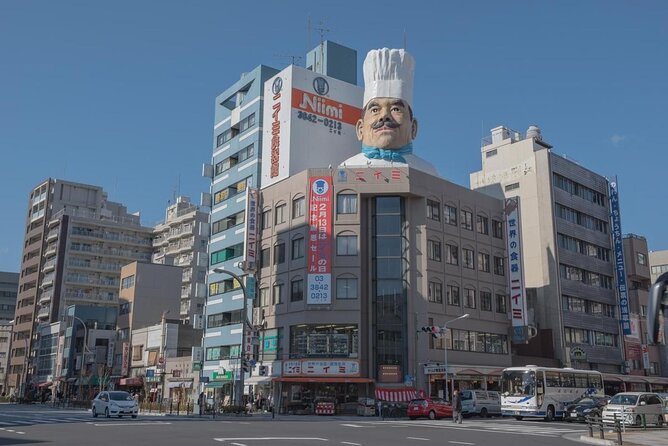
- 1 full hour at Kappabashi Street for kitchen-knife shopping near Asakusa’s restaurant supply area
- Guides adapt to your interests, with examples like Akiko, Kay, Sue, and Amy adjusting focus to match what people wanted
- Mobile ticket keeps things simple on the day
How Asakusa history leads you to real kitchen-knife shopping
This tour has a clever idea: don’t treat Asakusa’s sights and its food tools like two separate activities. You start in the old temple neighborhood, listening to the stories around Sumida Park and the Senso-ji complex, then you finish in the shopping streets where working cooks buy gear.
For me, that “why” matters. A kitchen knife isn’t just a souvenir; it’s a tool. When the guide connects what you’re seeing to why cooks care about their setup, the knife shopping stops feeling random. It becomes part of the same morning.
You’ll also get a guide’s help choosing, which is a big deal when you’re staring at rows of knives and steels and thinking, I’m not sure what I’m even looking at. The shopping time is set aside so you’re not doing it while also trying to find your way through a crowded shopping street.
You can also read our reviews of more tours and experiences in Tokyo.
Meeting at Kaminarimon and the small-group advantage
The tour starts at 2-chōme-20-6 Kaminarimon, Taito City and begins at 9:30 am. It runs about 3 hours 30 minutes, ending at Kappabashi Dougugai Kitchen Town, 3-chōme-18-2 Matsugaya, Taito City. There’s no hotel pickup, so you’ll want to arrive using public transportation.
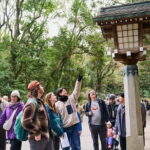
This is capped at 8 travelers, and the small group shows in how the tour moves. When the pace is controlled, it’s easier to ask follow-up questions—especially at the knife shops, where people often want guidance rather than a lecture.
If your group is 3 or more, you get headsets so you can hear the guide clearly even at a distance. That’s an underrated feature in Asakusa, where crowds and street sounds can make walking tours frustrating fast. You’ll also get a mobile ticket, which is handy if you prefer not to juggle printed papers.
Sumida Park and the 1400-year river connection
You kick things off at Sumida Park. The key story here is the river geography: this has been one of Tokyo’s important river routes, and the narrative ties it to where the story of Senso-ji Temple began about 1400 years ago.
It’s a good starting point because it sets a time scale. Instead of jumping straight to a gate and a crowd, you get a sense of how water routes shaped old Tokyo. You’ll take about 15 minutes here, and admission is not included.
Practical note: because admission isn’t included for this stop, check what you might need to pay on-site. If you’d rather avoid any surprises, plan on a small extra cost at this particular moment.
Asakusa’s information stop: rooftop views that help you orient
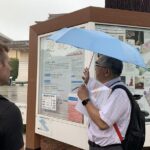
Next you visit the Asakusa Culture Tourist Information Center. This isn’t a random detour—it’s a useful reset.
You spend about 30 minutes, including time on the open terrace observation deck. That rooftop viewpoint helps you get your bearings over the area you’ve been walking through, and it gives you a clearer sense of how the old temple streets connect to the rest of Asakusa.
Admission here is free, so it’s a straightforward stop that still feels like “doing something,” not just passing time.
Thunder Gate, Nakamise Street, and Hozomon’s gate-to-gate transition
From there you move into the temple approach area.
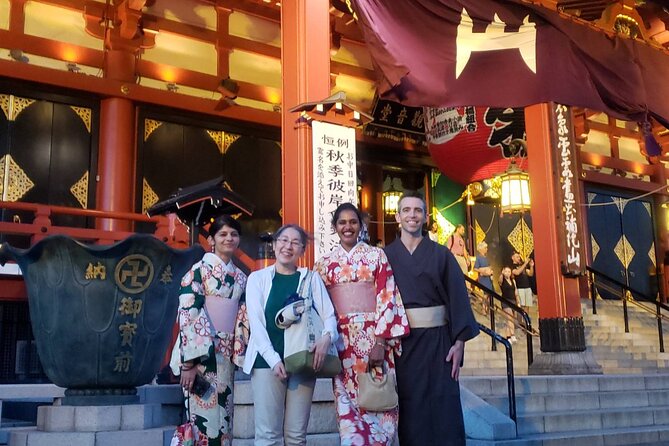
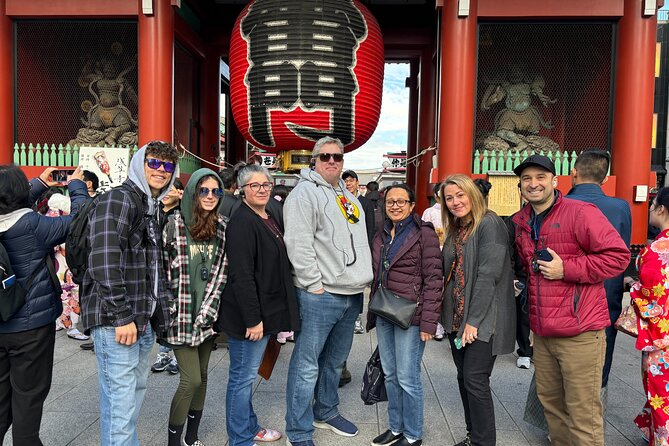
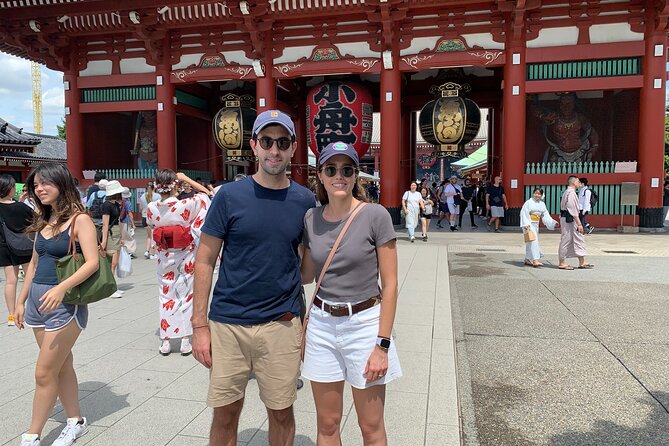
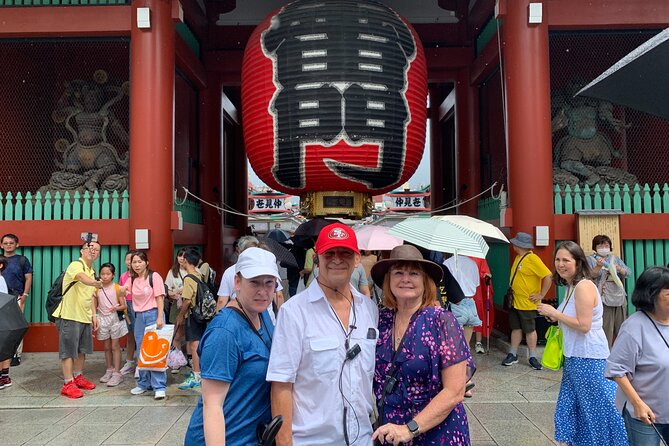
You’ll stop at Kaminarimon (Thunder Gate), where the iconic giant red lantern hangs under the gate. This is one of those landmarks that makes Tokyo feel like Japan-at-a-postcard—except the guide’s job is to add the context so it’s more than a photo stop. It takes about 15 minutes, and admission is free.
Then you walk part of Nakamise Shopping Street, which leads toward Senso-ji. You might expect solemn religious space, but this street has a more friendly, welcoming shopping atmosphere. You’ll spend about 15 minutes here, and admission is free.
After that comes Hozomon, described as the inner of two big entrances that lead deeper into Senso-ji. It’s a two-story gate, and you’ll get about 15 minutes at this stop as well, with free admission.
What I like about this sequence is that it keeps you moving forward physically, like you’re walking through layers of the temple complex. The guide helps you understand what you’re seeing at each threshold, not just the “big famous gate.”

Senso-ji Temple and Asakusa Shrine: two religions in one setting
You’ll spend time at Senso-ji Temple, Tokyo’s oldest temple and one of its most significant. There’s also mention of a five-story pagoda nearby, which is tied to Buddha’s ashes and historical goodwill connections involving Sri Lanka. The point for you isn’t to memorize every detail—it’s to notice how the site has layers of meaning beyond local legend.
This portion is about 15 minutes, and admission is free.
Right next to it is Asakusa Shrine, a Shinto shrine sitting alongside the Buddhist temple complex. That “two religions in one premises” contrast is where the guide’s explanation becomes useful. It’s easy to think of Japanese traditions as separate categories, but this place shows how they overlap in everyday space.
You’ll also get around 15 minutes here, and admission is free.
The takeaway: by the time you reach the garden walk next, you’ve already seen how Asakusa’s identity isn’t one single flavor—it’s a mix you can literally walk through.
Denboin Garden in Rokku: a calmer pocket between temple and street
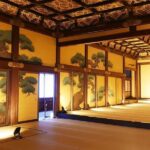
After the main temple stops, the tour shifts to a quieter feel with Sensō-ji Denboin Garden. You get about 30 minutes, and admission is listed as free.
The idea here is to step away from the big temple area and into the Rokku area, which is traditional and known for entertainment—but this stop is meant to feel like a pause. The tour description also mentions moving from the Meiji period into the present day, with stops along the way.
This is the part of the morning that helps you reset before you tackle Kappabashi. When you’ve just walked through major landmarks, you need a breather. This garden time is long enough to feel like a real break, not just a quick “look and go.”
Kappabashi Street Kitchen Town: shopping knives like you mean it
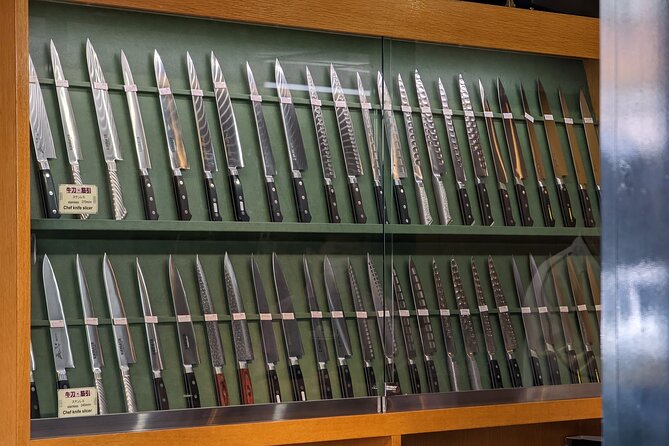
Now for the reason a lot of people book this tour: Kappabashi Street (Kappabashi Dogugai), sometimes called the kitchen-tool shopping area next to Asakusa.
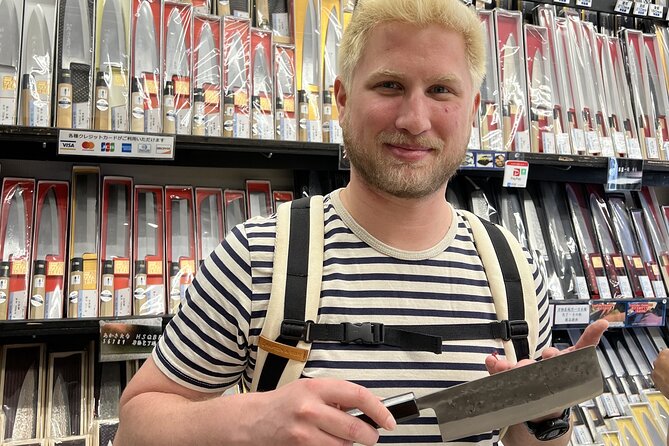
You’ll get about 1 hour here, and admission is free. This is where you see dozens of shops selling what restaurant operators use—so yes, Japanese kitchen knives are very much the point.
Here’s why the guide help matters. Even if you already know what you want, it’s hard to shop efficiently when:
- everything looks like it’s for a slightly different cooking style,
- stores vary in layout and pricing,
- and you’re doing it while also trying not to get lost.
The guide’s job is to steer you toward options that match your interests, and the tour is set up specifically for that. In other words, you’re not just wandering and hoping you’ll learn something. You’re shopping with a plan, within a time limit.
From the different guide examples on the tour, you can also expect the day to adjust. If you show up mainly for knives, the guide can lean into that focus. If you want to browse and compare as well, you still get guidance.
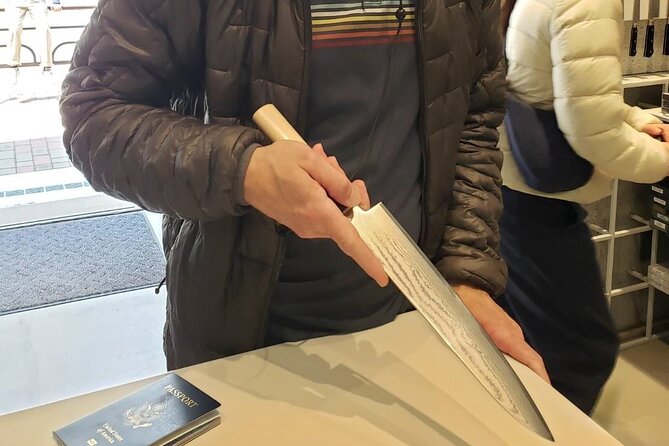
This is also a strong gift-buying moment. Knives are practical, but they’re also personal. With help, you’re more likely to come home with something the person actually wants—especially if you’re buying for chef friends or home cooks.
Price and value: what $78.18 buys you in real time
The price is $78.18 per person, and the tour runs 3 hours 30 minutes. It’s also designed for small groups (max 8), with headsets included for groups of 3+. There’s no hotel pickup, and it ends near Kappabashi, which means you’re using your own transit—but you’re also not paying for a car ride.
So is it worth it? For me, the value comes from the combination:
- a structured history walk through major Asakusa landmarks, and
- a dedicated knife-shopping block in the exact area where the tools are sold to professionals.
If you only care about temples, you could build a cheaper self-guided day. But if you want the connection between food culture and the knife shops—plus help choosing the right item—this format saves you time and confusion.
Also, the tour is often booked about 41 days in advance on average, which tells me it’s popular. If you’re traveling in a busy season, pick your date early.
Who this tour suits best (and who might want a different plan)
This works especially well if you’re:
- a foodie or home cook who likes learning how tools connect to technique,
- shopping for kitchen gifts (especially for people who cook often),
- or you want a guided route through Senso-ji and the surrounding streets without getting overwhelmed.
You might want to skip it (or pair it with another plan) if you:
- want a slow, reflective temple-only day,
- dislike shopping stops,
- or you’re only interested in the sights and prefer to shop on your own schedule.
Should you book this Asakusa knife-and-history tour?
If you’re choosing between a standard Asakusa walking tour and something more focused, I’d book this one when you want both context and practical shopping.
The biggest reasons to go are the small-group feel, the headsets when groups are larger, and the fact that you get a real chunk of time at Kappabashi with guide support. That last part is what turns the morning from sightseeing into an outcome: you might actually come back with the knife you wanted—or at least with a clearer sense of what to buy.
If you’re the type who thrives when a plan is laid out for you and you’d rather ask questions than guess, this is an easy yes.
FAQ
Where does the tour start and end?
It starts at 2-chōme-20-6 Kaminarimon, Taito City, Tokyo and ends at Kappabashi Dougugai Kitchen Town, 3-chōme-18-2 Matsugaya, Taito City, Tokyo.
What time does the tour start?
The tour starts at 9:30 am.
How long is the experience?
The tour lasts about 3 hours 30 minutes.
How many people are in a group?
The tour has a maximum of 8 travelers.
Are headsets provided?
Yes. For a group of 3 or more, headsets are provided so you can hear the guide clearly.
Is the ticket mobile?
Yes, the tour uses a mobile ticket.
Is hotel pickup or drop-off included?
No. Hotel pickup/dropping is not included.
What are the main sights on the walking part?
You’ll see Sumida Park, Asakusa Culture Tourist Information Center, Kaminarimon, Nakamise Shopping Street, Hozomon, Senso-ji Temple, Asakusa Shrine, and Sensō-ji Denboin Garden, then you’ll continue to the knife shopping area.
Where does the knife shopping happen?
You’ll spend about 1 hour at Kappabashi Street (Kappabashi Dogugai), the kitchen-knife shopping street adjacent to Asakusa.
Are admission tickets included for the stops?
Most stops list free admission, but Sumida Park notes that the admission ticket is not included.
Can you get a refund if you cancel?
Yes. You can cancel for a full refund up to 24 hours before the experience’s start time.