REVIEW · TOKYO
Private Japanese Sample Food Making and Asakusa History Tour
Book on Viator →Operated by Japan Awaits · Bookable on Viator
Fake food, real hands-on fun. You learn the craft behind Japanese sampuru by making a tempura model yourself, then you walk past Sensoji Temple and into the street that feeds Asakusa. One small drawback: the full tour is about 3 hours, so shopping is more window-gazing and quick finds than deep, spend-all-day browsing.
I like that it’s run as a small group experience capped at 15, so the workshop doesn’t feel rushed or lost in a crowd. You also leave with a take-home sample you made in class, not just photos of other people’s work.
It’s built for ages 7+, with wheelchairs and strollers accessible, and it runs with an English-speaking guide. The only real heads-up I’d give: since you’ll handle wax, skip nail polish and nail art if you can.
In This Review
- Key things you’ll notice on this tour
- Why Japanese sample food is more than fake
- Making tempura sampuru: what you actually do in the workshop
- Kappabashi Street (Kitchen Town): the fast way to shop like a maker
- Sensoji Temple and Nakamise Dori: Asakusa’s classic walk
- Timing, meeting point, and how to make the 3 hours feel long
- Price and value: is $172.66 worth it?
- Who should book this (and who might skip it)
- Optional longer Tokyo add-ons and the tempura lunch idea
- Should you book this Japanese sampuru + Asakusa tour?
- FAQ
- How long is the tour?
- What time should I meet, and where is the meeting point?
- Which days does it run?
- Is the tour suitable for children and families?
- Is the tour accessible for wheelchairs and strollers?
- What do I make in the workshop, and do I take it home?
- Is an English-speaking guide provided?
- What attractions are included besides the workshop?
- Are meals included?
Key things you’ll notice on this tour
- A real workshop, not a demo: you make a sampuru piece to take home
- Capped group size: up to 15, with enough attention for hands-on work
- Kappabashi Street focus: kitchen tools plus sample food displays in one compact walk
- Sensoji + Nakamise Dori timing: classic Asakusa sights without needing all-day plans
- The craft story behind the plastic: why restaurants use these displays
Why Japanese sample food is more than fake
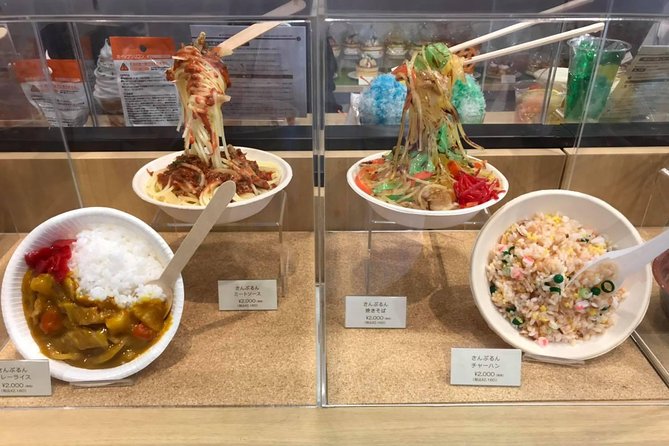
This is one of those Tokyo experiences that sounds silly until you see it close up. Japanese restaurants often line their windows with glossy, perfectly plated “food” that looks so real you want to try it. Then you learn the truth: it’s made by hand (plastic or wax), and the details are the whole point.
Before you start making your own, you get context about how sampuru became part of everyday restaurant life. You’ll hear the origin story that traces back to the 1930s, when Takizo Iwasaki in Gujo Hachiman reportedly created an omelet out of wax so realistic his wife couldn’t tell the difference. That story also connects to the modern industry and how production grew through the 1950s.
And here’s why I found it worth your time: the craft is careful and delicate. Artisans talk about years of practice to perfect the technique, and the cost can be far higher than you’d expect for “toy-looking” food. Once you know that, the workshop stops being a gimmick. It becomes a short lesson in design, realism, and food presentation.
You’ll also get the fun, practical part built in. Restaurants use sampuru displays to communicate what’s on offer, help customers decide quickly, and keep food-looking-attractive even when the kitchen is busy. That’s why the tour’s path makes sense: you learn the craft, then you walk through the neighborhood where these items and tools are bought and sold.
You can also read our reviews of more tours and experiences in Tokyo.
Making tempura sampuru: what you actually do in the workshop
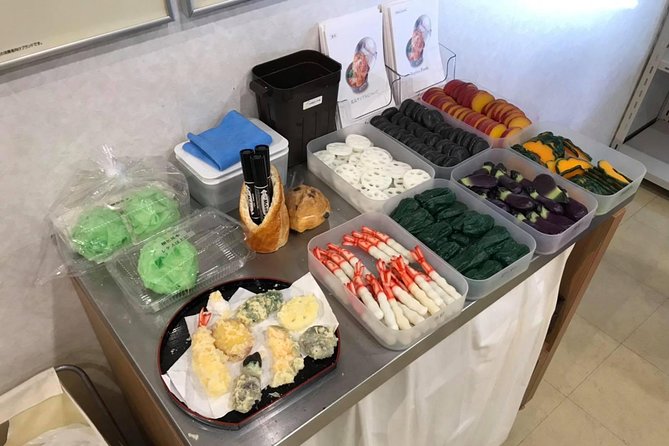
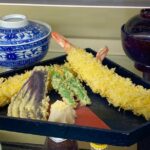
The centerpiece of the tour is a hands-on workshop in making Japanese sample food models. You’ll start with a quick introduction: seeing different types of sampuru, learning how the craft started, and understanding what these displays mean for restaurants and customers.
Then you get your hands in it.
In this class, you make tempura sampuru foods, and you take home the piece you create. That take-home part matters more than it sounds. A souvenir you can touch tends to stick in your memory longer than a photo you’ll scroll past in a week. Plus, it gives you a reason to look closely at displays afterward, because you’ll know what’s hard and what’s easy.
Here’s the one practical thing I’d tell you to prepare for: the workshop uses wax, and the tour recommends you skip nail polish or nail art. Wax can remove it. If you wear it, you might end up with less “fresh manicure” and more “art project” at the end.
Pace-wise, this is built for a small group (up to 15). That usually means you’re not standing around waiting your turn the whole time. You get guidance while you work, and you leave with something you made, not just a finished-looking result you watched someone else create.
Kappabashi Street (Kitchen Town): the fast way to shop like a maker
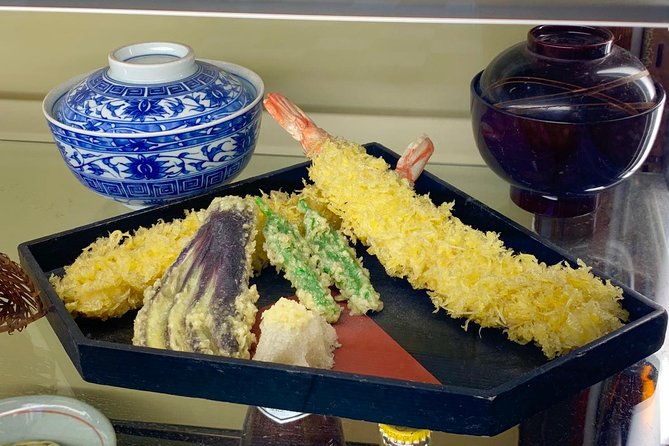
After your workshop, you walk through Kappabashi Street, often called Kitchen Town. This is the part where the tour becomes more than a class. You shift from making sampuru to seeing the ecosystem that supports it.
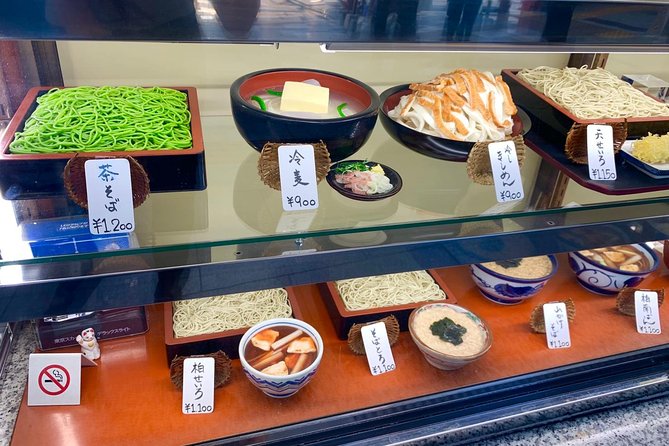
Kappabashi is famous for shops full of kitchen tools and food-display-related items. Even if you don’t plan to buy much, it’s a visual candy store: you’ll see the kinds of molds, tools, and food-themed products that connect directly to what you just made.
What I like about doing this walk right after the workshop is your brain is still switched on. You just learned how these items are crafted and why they look real. So when you see samples, signage, and display culture up close, it clicks faster. You’re not just collecting souvenirs; you’re learning what’s behind them.
There’s also a practical advantage: you get photo opportunities while the guide helps you spot good angles and key sights along the route. If you like taking pictures of food culture without turning it into a random wander, this structured walk works.
One note: because the full tour is around 3 hours total, you won’t have time for long detours or a deep shopping day. Treat it as a guided browse with chances to pick up small, meaningful items—especially if you’re traveling with kids or you don’t want Tokyo logistics to swallow your afternoon.
Sensoji Temple and Nakamise Dori: Asakusa’s classic walk
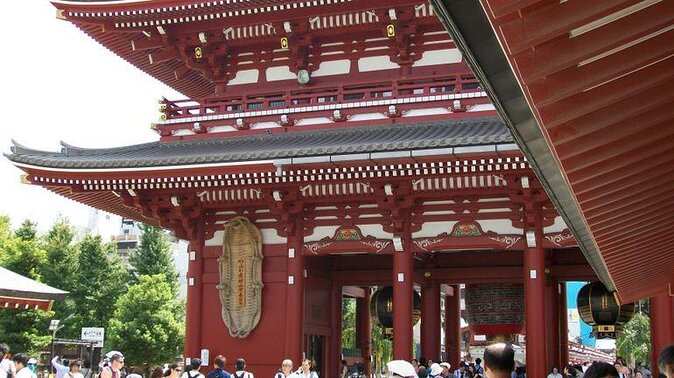
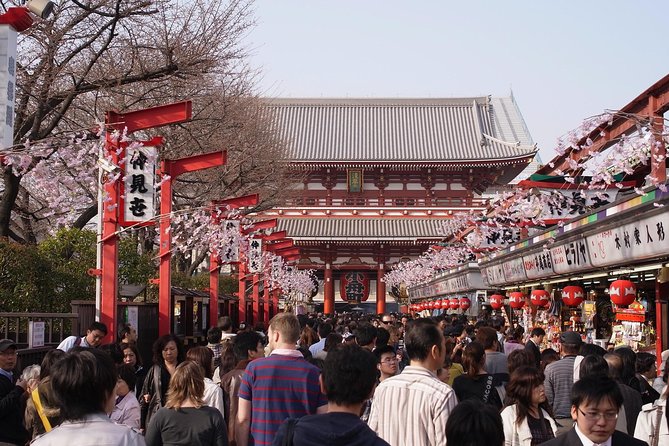
The tour ends with one of Tokyo’s most iconic temple experiences. You visit Senso-ji Temple (also called Asakusa Kannon Temple), which is described as Tokyo’s oldest and most popular temple. You’ll have about 30 minutes there, and admission is included.
You’re not given a huge time block, so I’d approach this with the right mindset: enjoy the main sights, take the photos you want, and don’t try to “do everything.” In a limited time window, the goal is to see what makes the place iconic and then move into the nearby shopping lane where the atmosphere becomes part of the story.
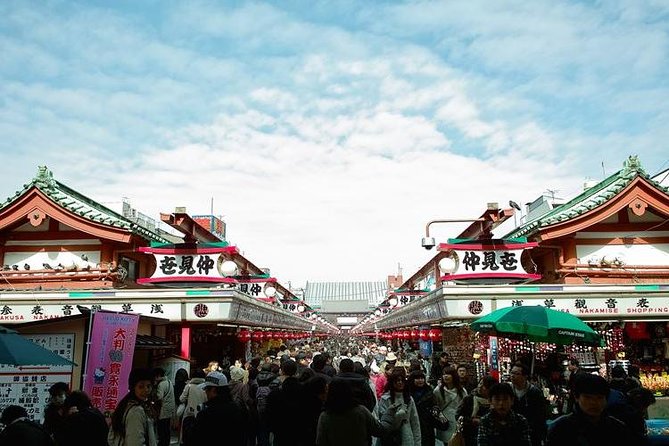
That lane is Nakamise Dori, the shopping street connecting the main gate and main hall. It’s where you’ll feel the Asakusa rhythm—shops, snacks, souvenir energy. Since your tour already started with Japanese food craft, this part feels extra connected. Food is everywhere here, just in a more edible, street-stand form.
A strong bonus: having an English-speaking guide means you’re not just walking through a crowd. You’re getting context for what you’re looking at, so the time feels purposeful rather than like “we walked around and took photos.”
Timing, meeting point, and how to make the 3 hours feel long
This tour runs about 3 hours. It starts at 10:00 AM, with a meeting time of 9:45 AM. The meeting point is the APA Hotel Asakusa Tawaramachi Station Mae (1-chōme-2-3 Nishiasakusa, Taito City, Tokyo 111-0035, Japan), and the experience ends back at that same meeting point.
Why does timing matter? Asakusa is busy and the streets are narrow in spots. If you arrive rushed, you’ll spend energy finding the group instead of enjoying the experience. Give yourself a little buffer around the meeting time so the first part (workshop intro and getting set up) goes smoothly.
The tour operates in all weather conditions except typhoon or extreme situations. You should dress for real Tokyo weather—hot, humid, cold, or rainy—and expect the itinerary to adjust slightly if conditions are rough.
If you’re coming with strollers or using a wheelchair, the tour notes accessibility. Still, Asakusa’s sidewalks and crowd patterns can vary hour to hour, so plan for slower movement than “ideal map speed.”

Price and value: is $172.66 worth it?
At $172.66 per person for roughly 3 hours, the price isn’t low. But this is one of those cases where you’re paying for several specific things at once.
Here’s what’s included:
- English-speaking guide
- Hands-on Japanese sampuru workshop
- A take-home sample you make in class
- Walking tour of Kappabashi Street
- Visit to Senso-ji Temple with admission included
- Photo opportunities and explanations of sampuru history/craft
What’s not included: meals and food and drinks, plus any optional add-ons you might choose separately.
When I judge value, I look at what you walk away with. A take-home item you made yourself is a big deal for value. Admission at Senso-ji is included too, which helps offset cost compared to tours that only “pass by” sights. And because the group is capped at 15, you’re not paying for a huge crowd experience where you wait your turn.
The other factor is that this isn’t just a history walk. It’s part craft instruction and part neighborhood culture. You get a “before-and-after” effect: you learn how sampuru is made, then you see where people shop for the materials and how those displays fit the local restaurant scene.
If you’re a foodie, a craft fan, or traveling with kids who enjoy doing activities more than watching, the structure justifies the price better than a generic sightseeing loop.
Who should book this (and who might skip it)
This tour is built for ages 7 and up, and children ages 7 to 14 must be accompanied by a guardian age 20 or older. Wheelchairs and strollers are accessible, and it’s a small group size capped at 15, which helps keep the workshop experience manageable.
I think it fits best if:
- You like hands-on activities more than lectures
- You want a focused Asakusa plan without turning it into an all-day mission
- You’re curious about Japanese food culture beyond eating
- You want a guided way to connect Kappabashi shopping with Sensoji’s iconic scene
I’d consider skipping if:
- You want freeform, long shopping time with no structure
- You hate any hands-on workshop (because wax is part of the process)
- You’re traveling only for temple photos and don’t care about sampuru craft
Also, note the tour runs on Tuesdays, Thursdays, and Sundays (10:00 AM to 12 PM, except some holidays). If your Tokyo dates don’t match, you may need to shift plans or look at alternatives.
Optional longer Tokyo add-ons and the tempura lunch idea
If you want more time after the 3-hour core experience, the tour offers add-ons at checkout: a 4-hour or 6-hour Tokyo extension. It can run before or after the sampuru and Asakusa portion.
The add-on is private and includes public transportation for you and the guide, but optional activity costs aren’t included.
There’s also an add-on lunch option at the oldest tempura restaurant in Japan. If tempura is your thing, this can turn the whole day theme into something more than “one workshop snack story.” If you’d rather keep meals flexible, you can also skip it.
Should you book this Japanese sampuru + Asakusa tour?
If you want a Tokyo experience that mixes hands-on craft with two of Asakusa’s biggest landmarks, I’d book it. The workshop gives you a skill-based souvenir—something you made—then Kappabashi and Sensoji put that knowledge into context in the real place where sample food culture lives.
It’s also a strong choice if you’re traveling with kids who are 7+ and like doing. The small group size keeps attention on the work, and the final temple walk is simple enough to enjoy even without spending hours on logistics.
The main reason not to book is if you’re chasing a long shopping spree or you dislike any wax-based activity. Otherwise, this tour is one of the most practical ways to understand why Japanese sample food looks so good: you learn it, you make it, and then you see it everywhere around you.
FAQ
How long is the tour?
The tour lasts about 3 hours.
What time should I meet, and where is the meeting point?
Meet at 9:45 AM at APA Hotel Asakusa Tawaramachi Station Mae (1-chōme-2-3 Nishiasakusa, Taito City, Tokyo 111-0035, Japan). The tour starts at 10:00 AM.
Which days does it run?
It runs on Tuesdays, Thursdays, and Sundays from 10:00 AM to 12 PM (except some holidays).
Is the tour suitable for children and families?
Yes. It’s suitable for ages 7 and up. Children ages 7 to 14 must be accompanied by a guardian age 20 or older.
Is the tour accessible for wheelchairs and strollers?
Yes. Wheelchairs and strollers are accessible.
What do I make in the workshop, and do I take it home?
You make tempura sampuru foods in the hands-on workshop, and you take home the sample sampuru you make in class.
Is an English-speaking guide provided?
Yes, the tour includes an English-speaking guide.
What attractions are included besides the workshop?
You also get a walking tour of Kappabashi Street and a visit to Senso-ji Temple. Senso-ji admission is included.
Are meals included?
No. Meals, food, and drinks are not included.