REVIEW · TOKYO
Tokyo: Meiji Shrine Walking Tour — Shintoism & Imperial System
Book on Viator →Operated by Local Guide Stars · Bookable on Viator
A shrine lesson fits in 90 minutes. This Meiji Shrine small-group walk turns Tokyo noise into a calm lesson on Shinto and the Japanese Imperial system as you pass big torii gates, see traditional displays, and take part in simple shrine practices; I love how the guide gives meaning to what you’re doing (not just where to stand), and I also like that garden admission is included in the price. One thing to consider: most of the time is outdoors along shaded paths, so plan for summer heat or light rain.
I like that this tour keeps things personal. You’re capped at 15 people, and guides you might meet include Yuuki A, Nana, Nonoka, Keiko, and Nanami, with explanations delivered in clear English and lots of patience for questions.
You’ll start at Harajuku Station, walk through the shrine approach and main grounds, then finish back at the meeting point. The whole experience is set up for an easy pace: 1 hour 30 minutes that feels like a reset, not another checklist task.
In This Review
- Key highlights you should care about
- Why Meiji Jingu Feels Like a Reset from Harajuku
- Meeting at Harajuku Station and Keeping the Walk Low-Stress
- Walking Through the Shrine Path: Torii, Sake Barrels, Purification
- The Giant Wooden Torii Gate from Taiwan Cypress
- At the Main Shrine: Omikuji, Ema, and Omamori
- How the Meiji Shrine Garden Admission Fits In
- Cafe and Gift Shop Time at Café Mori no Terrace
- Price and Value: Is $21.22 Worth 90 Minutes?
- When This Tour Is a Great Fit (and When to Skip It)
- Booking Smart: Choose the Right Time for the Forest Walk
- Should you book this Meiji Shrine Walking Tour?
- FAQ
- How long is the Meiji Shrine walking tour?
- What does the tour include?
- Where does the tour start and end?
- What group size should I expect?
- Do I need a print ticket?
- What can I do at the main shrine during the tour?
- Is there food available during the tour?
- Is it refundable if my plans change?
Key highlights you should care about
- Small group pacing so you can ask questions while you walk
- Shinto rituals with context for purification, prayers, and offerings you see up close
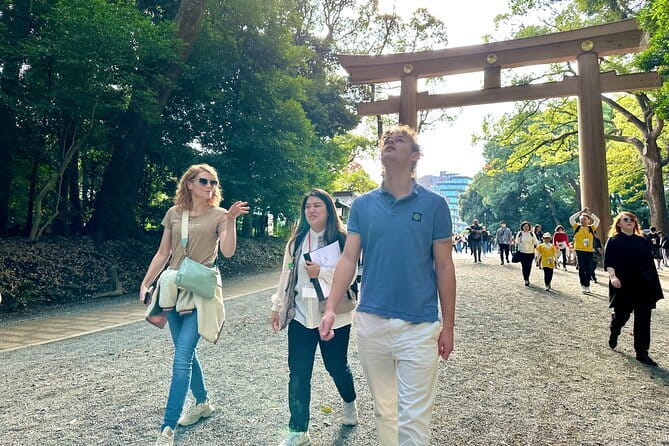
- The giant wooden torii gate made from cypress brought from Taiwan
- Garden admission included so you’re not hunting tickets mid-trip
- Omikuji, ema, and omamori time so you understand what each item is for
- Café Mori no Terrace for a calm break with light food and drinks
Why Meiji Jingu Feels Like a Reset from Harajuku
Meiji Shrine (Meiji Jingu) has a special trick. You start in the Harajuku area, where everything is fast and loud, then you move into a forested setting that feels like a different world. Even if you know Tokyo well, this area has a way of slowing you down.
What I like most is that the tour doesn’t treat the shrine like a photo backdrop. You’ll get help understanding the ideas behind what you’re seeing. That matters because Meiji Shrine is packed with little ritual moments—some obvious, some easy to miss if you’re just wandering. A guide helps you connect the dots fast.
And because it’s small-group guided, you’re not stuck reading signs only. You’re hearing explanations as they become relevant—right when you pass the purification area, when you reach the main shrine, and when you’re standing near the spots for omikuji and ema.
You can also read our reviews of more tours and experiences in Tokyo.
Meeting at Harajuku Station and Keeping the Walk Low-Stress
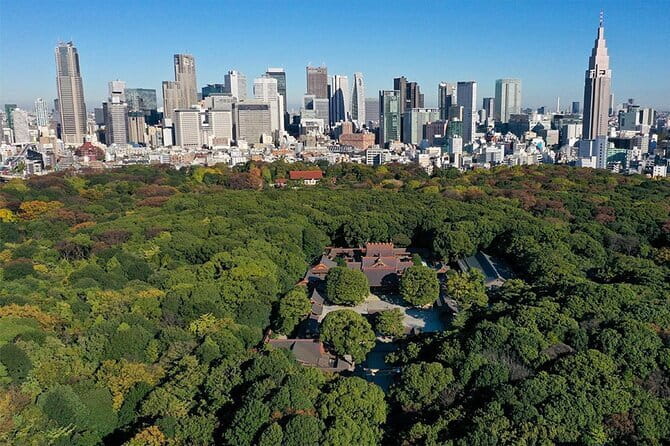
Your tour begins at Harajuku Station, specifically near 1 Chome-18 Jingumae, Shibuya, Tokyo 150-0001. The activity ends back at the meeting point, which is handy in a city where trains run like clockwork but directions can still get confusing.
Duration is listed at about 1 hour 30 minutes, which is a good length for jet lag days and tight itineraries. It’s also long enough for the meaningful parts: walking the forest approach, taking in the main shrine area, and adding the garden time that’s included.
You also get a mobile ticket, which reduces the friction of planning. No scrambling for paper tickets at the last minute.
Walking Through the Shrine Path: Torii, Sake Barrels, Purification
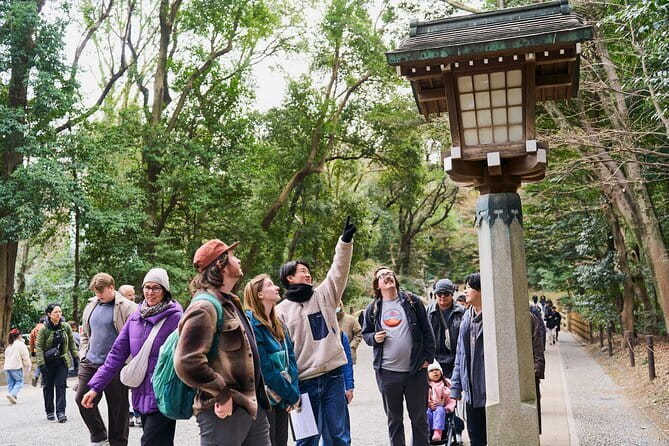
The tour route starts by entering through the Harajuku gate and moving along a wide, peaceful forest path toward the main shrine. Right away, you’re in “slow down” mode. This isn’t a quick corridor. It’s a transition space where the sights change gradually: bigger structures appear, and traditional displays start showing up along the way.
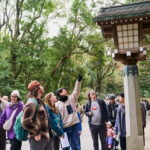
Along the approach, you pass through giant torii gates and traditional elements like sake barrel displays. Those aren’t just decoration. They reflect the shrine’s ceremonial character, and your guide’s role is to explain why these details matter.
Then comes the part people tend to rush past when they’re on their own: purification. The tour includes time to learn about the ritual steps you’ll see near the purification area. Even if you skip doing it yourself, you’ll understand what you’re watching and what it’s meant to accomplish.
This is one of those moments where a guide is genuinely worth it. If you go solo, you might recognize the gestures, but miss the purpose. With a guide, the ritual becomes legible.
The Giant Wooden Torii Gate from Taiwan Cypress
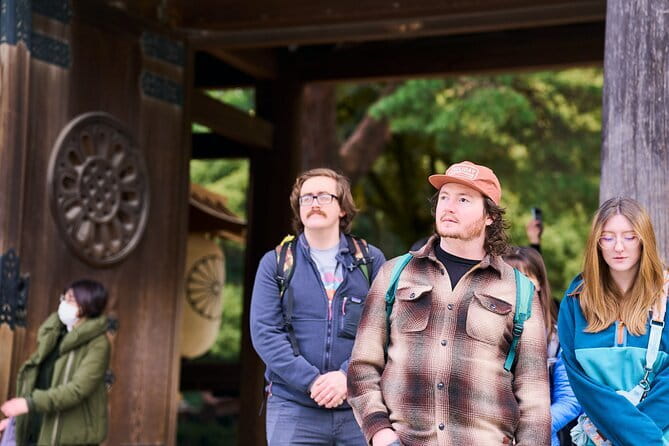
One of the most memorable stops is the big torii along the path—described as one of Japan’s largest wooden torii gates. What makes it especially interesting is the material story: it’s made from ancient cypress brought all the way from Taiwan.
This is a strong example of why guided context improves a shrine visit. You can stand under that scale on your own and still be impressed. But with the explanation, you’re also noticing the craftsmanship and the history behind the structure.
The stop here is short—around 5 minutes—so don’t treat it like your long break zone. Instead, treat it like a chance to take in the proportions. Look up. Then look back down at the walkway you just came through. The contrast helps you feel the design of the space.
At the Main Shrine: Omikuji, Ema, and Omamori

Reaching the main shrine is where your time becomes more hands-on. At this point, you’re given guidance on what you can do on-site, and you get time to explore.
Here’s what the tour explicitly includes as options:
- Offering a prayer
- Drawing a form of omikuji (a fortune)
- Writing a wish on an ema (wooden plaque)
- Checking out omamori (charms)
I like that the tour frames these items as part of a practice, not as random souvenirs. Omikuji and ema can feel mysterious if you don’t know the basic idea. With a guide, you can participate without guessing.
A practical tip: if you want to do the activities, keep your hands free. Bring a small bag or crossbody so you’re not wrestling with zippers when someone says it’s your turn.
Also, give yourself permission to be a little slow here. The shrine area is a place where people often lower their volume and move carefully. If you try to sprint through it like a museum, you’ll miss the atmosphere the guide is working to bring into focus.



How the Meiji Shrine Garden Admission Fits In
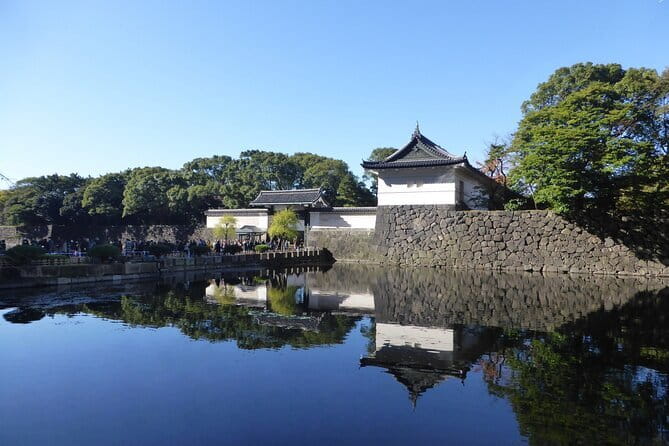
The tour overview promises Meiji Shrine Garden time and says admission fees for the garden are included. That matters because garden access can be the part that quietly turns a casual walk into a fuller visit.
Even with limited time, garden areas tend to add variety to the experience. Instead of staying in one ceremonial pocket, you get a slower-feeling section that complements the shrine rituals. It’s also a nice way to break up the experience after the approach path and before or after the main shrine focus.
In plain terms, this is how you turn a shrine stop into a rounder outing. If you only cared about the torii and the main hall, you could probably manage on your own. But by including the garden admission, the tour gives you more than a quick photo run.
Cafe and Gift Shop Time at Café Mori no Terrace

At the end of the visit, you’ll have time at Café Mori no Terrace near the shrine grounds. The big plus here is that it’s not a loud, rushed situation. It’s described as being in a quiet forest setting, and the café offers light meals and drinks.
You also get access to the nearby gift shop. That shop sells charms, traditional goods, and items exclusive to Meiji Jingu. If you’ve been doing the omamori and ema bits, this is where you can neatly align your purchases with what you participated in.
The stop is about 15 minutes, so don’t plan your full meal here unless you’re intentionally keeping it light. Think refresh and reset. Use it to cool down, refill water if you need it, and then head back out.
Price and Value: Is $21.22 Worth 90 Minutes?

At $21.22 per person, this isn’t a budget throwaway, but it also isn’t expensive for Tokyo. The value question comes down to what you get for that amount.
You’re paying for:
- A local guide for about 1.5 hours
- Included entry related to the Meiji Shrine Garden
- A small group size (max 15), which usually means less waiting and more time with your guide
One reason this works as a value buy is that shrine visits can get confusing quickly. If you don’t understand Shinto basics—like what rituals are for—you may spend your time reading signs instead of learning. Here, the guide becomes a translation tool and a time-saver.
And because much of the shrine experience on-site is presented as free entry areas during the walk, your paid value feels tied to the guided interpretation and the garden access included. In other words, you’re not paying just to get in somewhere—you’re paying to make sense of it while you’re there.
When This Tour Is a Great Fit (and When to Skip It)
This tour fits best if you want:
- A calm, green escape from central Tokyo without changing your entire plan
- Help understanding what you’re doing at the shrine—prayers, omikuji, ema, and omamori
- A guided explanation of Shintoism and the Japanese Imperial system, not just a walk-through
It may not be your best choice if you’re the kind of traveler who prefers to wander without any structure. The stops here are timed, and you’ll likely want to follow the flow to get the learning parts.
It’s also a good option for a solo traveler. Because the group is small and the guide welcomes questions, solo doesn’t have to feel like you’re standing out.
Booking Smart: Choose the Right Time for the Forest Walk
This tour gives you two tour times, so pick based on your day. If you’re trying to dodge the worst heat, choose the start that feels safest for your energy.
Also, remember this is a walking experience inside a forest setting. Even if it looks shady, Tokyo summers can still be intense. Dress in layers if you tend to get chilled indoors, and bring a small umbrella if rain might be in the picture.
Your best strategy is simple: decide whether you want the shrine vibe to be a quiet morning reset or a calm afternoon break, then choose the tour time that matches your mood.
Should you book this Meiji Shrine Walking Tour?
Yes, if you want a shrine visit that actually teaches you something while you walk. The strongest reason to book is that this isn’t just “see Meiji Shrine.” It’s a guided explanation of Shinto rituals and the Imperial system context, plus included garden admission and time at the main shrine for the practical items like omikuji, ema, and omamori.
I’d also book it if you value small-group pacing. Being capped at 15 people makes the experience feel more like a guided walk with room for questions, not a rushed group shuffle.
Skip it only if you’re happy with a self-guided photo-and-wander plan and you don’t care about understanding the meaning behind what you’re seeing. If that’s you, you might be fine going solo.
FAQ
How long is the Meiji Shrine walking tour?
It runs for about 1 hour 30 minutes.
What does the tour include?
You visit Meiji Shrine and the garden with a local guide. The tour includes admission fees for the Meiji Shrine Garden. You also have time at the café and gift shop near the shrine.
Where does the tour start and end?
It starts at Harajuku Station (near 1 Chome-18 Jingumae, Shibuya, Tokyo 150-0001) and ends back at the same meeting point.
What group size should I expect?
This experience has a maximum of 15 travelers.
Do I need a print ticket?
No. A mobile ticket is included.
What can I do at the main shrine during the tour?
You can offer a prayer, draw an omikuji, write a wish on an ema, and explore omamori charms.
Is there food available during the tour?
Yes. You stop at Café Mori no Terrace for light meals and drinks, plus time at the nearby gift shop.
Is it refundable if my plans change?
Yes. You can cancel for a full refund up to 24 hours before the experience starts. If you cancel less than 24 hours before, the amount paid is not refunded.